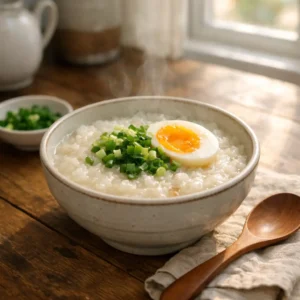
One morning while scrolling through food discussions on Reddit and short cooking clips on TikTok, I noticed something interesting. Many people were talking about simple breakfast foods that feel warm, light, and comforting. That conversation reminded me of one dish I often see mentioned in Asian cooking forums and travel stories: congee.
A congee breakfast recipe is one of those timeless meals that feels humble but deeply satisfying. At its core, congee is a rice porridge slowly cooked with water or broth until the grains soften into a creamy bowl of comfort. Across many parts of Asia, it has long been a common breakfast choice because it is gentle on the stomach and easy to customize with different toppings.
In this guide, I’ll walk you through everything you need to know about preparing a congee breakfast recipe at home. This article is designed for beginners, curious home cooks, and anyone looking for a simple morning meal that doesn’t require complicated ingredients.
Here’s what you’ll learn throughout the article:
- What congee is and why it is commonly eaten for breakfast
- The basic ingredients needed for a traditional rice porridge
- Step-by-step instructions for making congee at home
- Popular toppings and flavor variations
- Tips for meal prep and storing leftover congee
- Answers to common questions about congee and digestion
If you enjoy light morning meals, you might also enjoy ideas like healthy yogurt bowls for breakfast that follow a similar gentle start to the day.
Pro Tip: Rinse your rice thoroughly before cooking congee. Clean rice helps the porridge cook smoother and creates the soft, silky texture many people love in traditional congee.
Before we get into the cooking method, it helps to understand where this dish comes from and why it has become such a beloved breakfast around the world.
What Is a Congee Breakfast Recipe?
A congee breakfast recipe is a traditional rice porridge made by simmering rice in water or broth until the grains break down into a soft, creamy consistency. The dish is simple, yet incredibly versatile. Depending on the toppings and seasonings used, congee can be savory, mildly flavored, or slightly sweet. In many Asian households, this gentle rice porridge is a common morning meal because it is warm, filling, and easy to customize.
The Origins of Congee and Its Cultural Significance
Congee has been part of Asian food traditions for centuries. Versions of rice porridge appear in Chinese, Japanese, Korean, Thai, and Filipino cuisines, each with its own cooking method and toppings. In China, it is commonly called “zhou,” while in Japan it is known as “okayu.” Despite these variations, the basic idea remains the same: rice slowly cooked with plenty of liquid until it becomes a soft porridge.
Many families serve congee as a breakfast dish because it pairs well with small side foods like eggs, vegetables, and pickled items. Some people also enjoy it alongside simple morning dishes such as boiled eggs or light protein options. If you’re building a balanced morning plate, you might enjoy pairing congee with ideas from high protein breakfast ideas for extra variety.
Why Congee Is Popular as a Breakfast Dish
There are several reasons why congee remains a favorite breakfast choice across cultures. First, it is easy to prepare using basic pantry ingredients like rice and water. Second, the soft texture makes it comfortable to eat early in the morning when heavier foods may feel overwhelming.
Another reason many people appreciate congee is how flexible it is. A single bowl can be topped with vegetables, shredded chicken, tofu, herbs, or eggs. Some modern home cooks even combine it with contemporary breakfast trends by serving it alongside smoothie bowls or fruit-based dishes like those described in this smoothie bowls guide.
Pro Tip: For richer flavor, cook your congee with light chicken broth instead of plain water. The result is a deeper taste while still keeping the dish simple and comforting.
Understanding the background of congee helps explain why it has remained a dependable breakfast for generations. Next, we’ll look at why so many people today are adding this traditional rice porridge to their own morning routine.
Why Many People Choose Congee for Breakfast
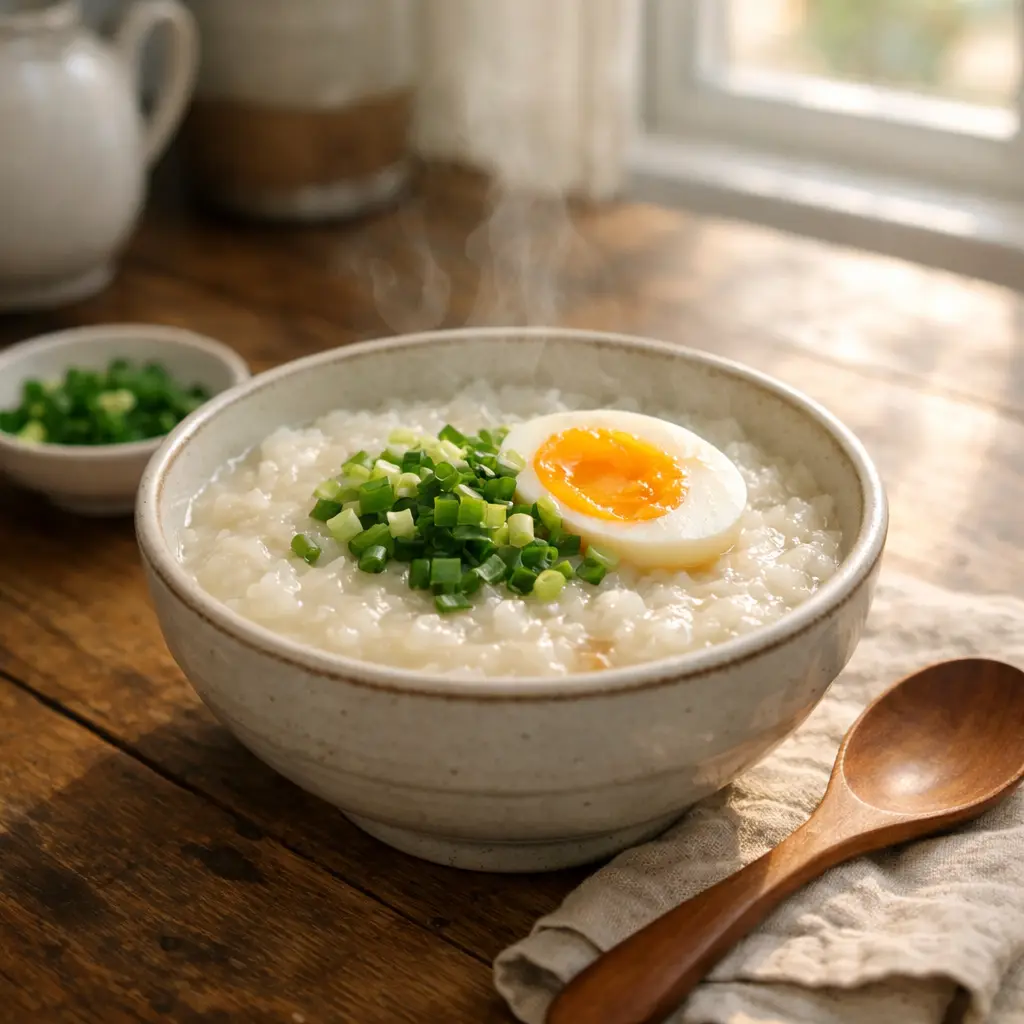
For many people, breakfast sets the tone for the rest of the day. Some prefer something light and warm rather than heavy or overly sweet foods. That’s one reason a congee breakfast recipe continues to gain attention among home cooks and food communities online. Its smooth texture, simple ingredients, and adaptable flavors make it a practical option for a calm and comforting start to the morning.
Can You Eat Congee for Breakfast?
Yes, and in many cultures it is one of the most traditional morning meals. Congee has long been served early in the day because it is easy to digest and doesn’t require complicated preparation. A bowl of rice porridge can be prepared with only rice and water, then finished with toppings like scallions, sesame oil, eggs, or vegetables.
In modern kitchens, many people combine congee with other breakfast favorites to build a balanced meal. For example, some serve it with fruit, yogurt, or small side dishes for added variety. If you enjoy exploring different morning meals, you might also find inspiration in recipes like an oatmeal breakfast smoothie, which offers another gentle and nourishing start to the day.
How Congee Fits Into a Light Morning Meal
Another reason a congee breakfast recipe works well in the morning is its flexible portion and flavor profile. You can keep it very simple with just rice and broth, or add ingredients that provide more protein and texture.
Some common breakfast pairings include boiled eggs, tofu, mushrooms, or lightly sautéed vegetables. A soft-boiled egg is especially popular because the creamy yolk blends nicely into the rice porridge. If you want to prepare eggs perfectly for your breakfast bowl, you may find this guide on how to boil eggs perfectly helpful.
Pro Tip: When reheating leftover congee, add a small splash of water or broth before warming it. The porridge thickens as it sits, and a little liquid helps bring back its smooth, creamy consistency.
With its comforting texture and endless topping possibilities, congee remains a dependable breakfast choice. Next, we’ll look at the key ingredients you need to prepare a traditional bowl of this classic rice porridge.
Key Ingredients for a Traditional Congee Breakfast Recipe
When preparing a comforting bowl at home, the beauty of a congee breakfast recipe lies in how simple the ingredient list can be. At its core, a congee breakfast recipe requires only a few pantry staples, which is why this dish has remained popular for generations. Most home cooks begin their congee breakfast recipe with plain white rice and water or broth, slowly simmered until the grains soften and create a creamy porridge texture.
Basic Ingredients for Classic Rice Congee
The foundation of a congee breakfast recipe typically starts with uncooked rice, water or broth, and a pinch of salt. The rice slowly releases starch during cooking, which gives the congee breakfast recipe its signature silky texture. Many cooks prefer using jasmine rice because it produces a smooth and slightly aromatic base, though other types of rice can also work in a congee breakfast recipe.
Some people like to add ginger slices or a dash of sesame oil while the congee breakfast recipe cooks. These small additions introduce gentle flavor while still keeping the dish simple and comforting. In many kitchens, the congee breakfast recipe is simmered for about 45 minutes to an hour, allowing the rice grains to break down naturally into a soft porridge.
Popular Toppings and Flavor Add-Ins
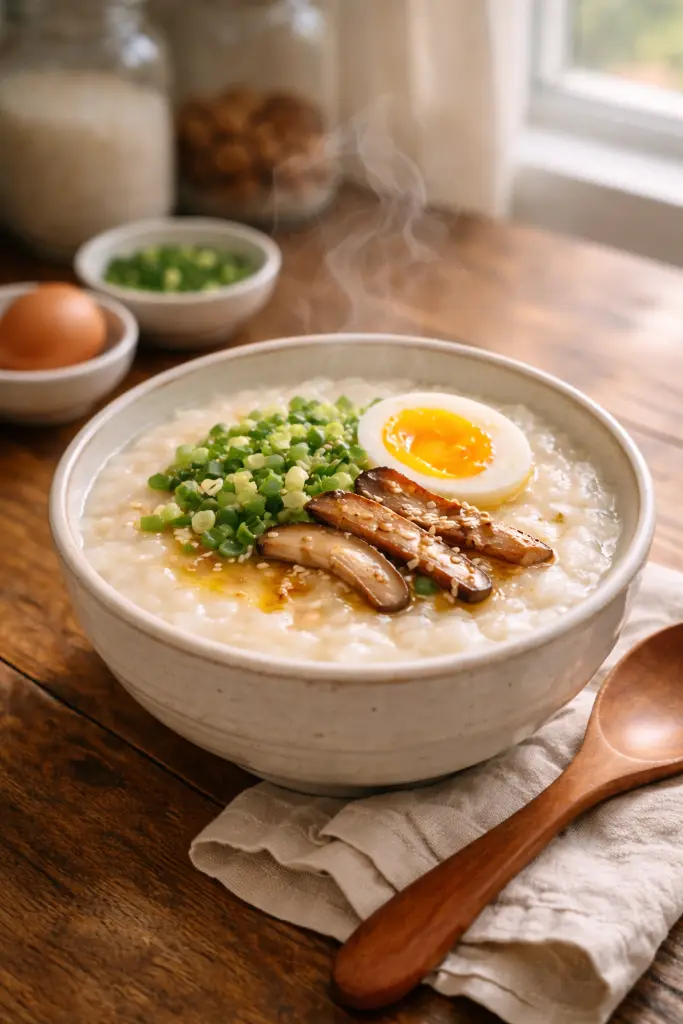
Once the base is ready, the congee breakfast recipe becomes a blank canvas for toppings. This is where home cooks can personalize their congee breakfast recipe depending on taste and available ingredients. Popular savory toppings for a congee breakfast recipe include shredded chicken, tofu cubes, mushrooms, green onions, and soft-boiled eggs.
Many families also enjoy adding light side dishes to complement the congee breakfast recipe, creating a balanced morning meal. For example, some people pair their bowl with fermented vegetables or gut-friendly dishes similar to those found in recipes like this gut health recipe, which also focuses on gentle and nourishing ingredients.
Pro Tip: If you want a creamier texture in your congee breakfast recipe, lightly mash a few rice grains against the pot while cooking. This releases more starch and naturally thickens the porridge without adding extra ingredients.

Because the base of a congee breakfast recipe is so flexible, the toppings can change from day to day. Next, we’ll walk through the simple step-by-step method for cooking a congee breakfast recipe so you can prepare it easily in your own kitchen.
Step-by-Step Congee Breakfast Recipe
Cooking a comforting bowl using a congee breakfast recipe is surprisingly simple. The process mainly involves simmering rice slowly in liquid until the grains soften and release starch. This slow cooking method is what gives a congee breakfast recipe its creamy, porridge-like consistency. Once you understand the basic steps, preparing a congee breakfast recipe becomes an easy part of your morning routine.
Simple Method to Cook Congee at Home
To start a classic congee breakfast recipe, rinse one cup of rice under cold water until the water runs clear. This step helps remove excess starch and keeps the texture smooth. Add the rinsed rice to a pot with about six to eight cups of water or broth. Bring the mixture to a gentle boil, then reduce the heat and let it simmer.
While the pot cooks, stir occasionally so the rice does not stick to the bottom. Over time, the grains break apart and the liquid thickens, turning the mixture into the soft base that defines a congee breakfast recipe. Depending on your preferred thickness, the cooking time usually ranges from 40 to 60 minutes.
Some home cooks enjoy pairing their bowl with other morning foods to add variety to the meal. For example, if you like balanced breakfast combinations, you might also enjoy simple dishes featured in guides like smoothie recipes, which many people prepare alongside warm breakfast bowls.
Cooking Tips for Perfect Texture
The texture of a congee breakfast recipe can be adjusted depending on how much liquid you add during cooking. If the mixture becomes too thick, simply stir in a small amount of warm water or broth. This flexibility allows you to tailor the congee breakfast recipe to your personal preference.
Many cooks also like to add small flavor layers while the porridge cooks. Ginger slices, garlic, or a dash of soy sauce can add subtle depth without overpowering the mild base of the congee breakfast recipe. After cooking, the porridge should appear creamy and slightly loose rather than stiff.
Pro Tip: For a smoother bowl, cook your congee breakfast recipe on low heat and stir occasionally. Gentle cooking allows the rice grains to break down gradually, which creates the classic silky texture associated with traditional congee.
Once the basic method becomes familiar, you can experiment with toppings and ingredients. In the next section, we’ll look at the most popular ingredients people like to add to a congee breakfast recipe to create different flavor combinations.
What to Put in Congee for Breakfast
One of the reasons many home cooks enjoy making rice porridge in the morning is how flexible it can be. A warm bowl prepared from a congee breakfast recipe can easily shift from simple to flavorful depending on the toppings you add. Some people keep it minimal with herbs and eggs, while others build a heartier breakfast bowl with vegetables and protein.
Savory Breakfast Toppings for Congee
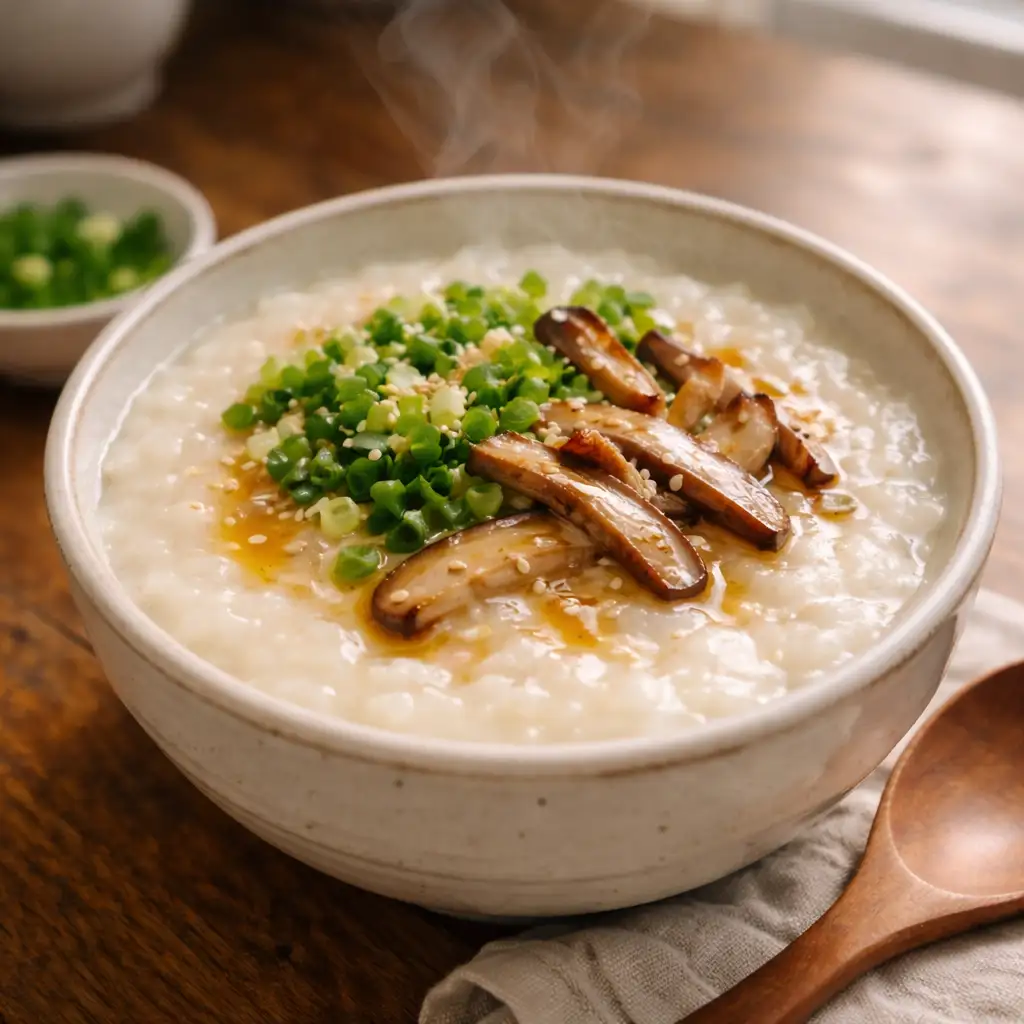
Savory toppings are the most traditional way to serve congee. A bowl based on a congee breakfast recipe often includes sliced green onions, sesame oil, soy sauce, or shredded chicken. Soft tofu cubes and sautéed mushrooms are also common additions that add texture without overpowering the mild rice base.
Eggs are another favorite topping because they blend beautifully into warm rice porridge. A soft-boiled egg, for example, creates a rich layer of flavor when the yolk mixes into the bowl. If you want to prepare eggs perfectly for your morning meal, this guide on how to boil eggs perfectly can be helpful for timing and consistency.
Sweet Morning Congee Variations
Although savory bowls are more common, sweet variations also appear in some kitchens. A sweet version inspired by a congee breakfast recipe may include honey, fruit slices, or a small drizzle of coconut milk. These additions create a gentle morning dish that feels closer to oatmeal or other warm grain breakfasts.
Some home cooks enjoy pairing sweet rice porridge with fruit-based drinks or smoothies to add freshness to the meal. If you enjoy mixing warm and cool breakfast items, ideas from guides like smoothie recipes can provide simple drink options that complement a light rice porridge breakfast.
Pro Tip: Add toppings gradually rather than all at once. This helps you balance flavors and keeps the base of your rice porridge smooth and comforting.
The ability to customize each bowl makes rice porridge a flexible morning meal. In the next section, we’ll look at several popular variations inspired by the classic congee breakfast recipe so you can experiment with new flavors at home.
Variations of a Congee Breakfast Recipe
One reason many home cooks return to a congee breakfast recipe again and again is its flexibility. Once you understand the basic rice porridge method, you can create many different versions depending on the ingredients available in your kitchen. From protein-packed bowls to simple vegetarian options, a congee breakfast recipe adapts easily to different tastes and dietary preferences.
Chicken Congee Breakfast Bowl
A chicken version is one of the most well-known ways to serve a congee breakfast recipe. In this variation, shredded chicken is added to the simmering rice during the final stage of cooking. The chicken gently flavors the porridge while adding protein and texture.
Many cooks finish the bowl with green onions, sesame oil, and thin slices of ginger. These toppings add aroma and brightness to the dish without overwhelming the delicate base of the congee breakfast recipe. For a more complete breakfast plate, some people pair their bowl with simple vegetable sides or light morning snacks such as those found in guides like healthy snacks for weight loss.
Vegetarian and Plant-Based Congee Ideas
Plant-based versions are equally popular and easy to prepare. A vegetarian variation of a congee breakfast recipe may include tofu cubes, sautéed mushrooms, spinach, or roasted vegetables. These ingredients add color and texture while keeping the dish light and satisfying.
Some cooks also like adding fermented foods or vegetables with natural probiotics to complement the mild flavor of rice porridge. For example, pairing a warm bowl with fermented drinks or foods discussed in guides like kombucha recipe can create a balanced and interesting breakfast experience.
Pro Tip: When adding vegetables to your congee breakfast recipe, cook them separately first. Stir them into the bowl just before serving so they keep their texture and color.
These variations show how one simple dish can take many forms depending on the ingredients you choose. Next, we’ll discuss a question many readers ask: whether rice porridge is suitable for people with sensitive diets, including those going through medical treatments.
Is Congee Good for Chemo Patients?
In many cultures, warm rice porridge has long been associated with comfort food during recovery or times when someone needs gentle meals. Because of its soft texture and mild flavor, a bowl prepared from a congee breakfast recipe is sometimes chosen by families when someone prefers light foods. The smooth consistency of rice porridge can make eating feel easier, especially when stronger flavors or heavy dishes feel overwhelming.
Why Soft Foods Like Congee Are Often Considered Gentle
A bowl made from a congee breakfast recipe contains very simple ingredients—usually rice, water or broth, and light toppings. This simplicity is one reason people often describe rice porridge as easy to eat. When cooked slowly, the grains break down into a silky texture that requires minimal chewing, which some individuals appreciate when they prefer softer meals.
Many caregivers around the world prepare mild dishes like rice porridge because they can be customized easily. A congee breakfast recipe may include light additions such as shredded chicken, tofu, or soft vegetables depending on personal preference. Some people also pair it with soothing drinks like herbal tea; if you enjoy gentle beverages alongside warm meals, guides discussing options like herbal tea benefits may provide additional inspiration.
Important Notes for Sensitive Diets
While a congee breakfast recipe is often described as comforting and simple, nutritional needs can vary greatly during medical treatment. Some individuals may prefer plain rice porridge, while others may require additional protein or specific ingredients recommended by healthcare professionals.
It’s important to remember that a congee breakfast recipe is simply a food idea, not a medical solution. Dietary needs during treatment can differ from person to person, and any changes to meals should be discussed with a qualified healthcare provider.
Pro Tip: When preparing rice porridge for someone with a sensitive appetite, keep the base simple at first. Then allow toppings to be added gradually so the bowl remains gentle and easy to eat.
Disclaimer: This recipe is shared for informational purposes and is not a substitute for medical advice.
Stories from food communities often mention rice porridge as a comforting meal during recovery, which explains why the congee breakfast recipe continues to appear in conversations about gentle foods. In the next section, we’ll look at another common question: whether rice porridge may feel soothing for people who experience heartburn.

Is Congee Good for Heartburn?
Many people turn to simple foods when their stomach feels sensitive, and rice porridge often appears on that list. Because it is made mostly from rice and water or broth, a bowl based on a congee breakfast recipe tends to be mild and easy to adjust. Its soft texture and gentle flavor make it a popular option for mornings when heavier or greasy meals may feel uncomfortable.
Why Mild Rice Porridge May Feel Soothing
The cooking method behind a congee breakfast recipe transforms rice into a smooth porridge that is light and warm. Foods with simple ingredients are sometimes preferred when someone wants a breakfast that feels calm and easy to eat. Since the base usually contains only rice and liquid, a bowl prepared from a congee breakfast recipe can be served plain or topped with mild ingredients.
Some people keep the toppings minimal, using sliced green onions, soft eggs, or small portions of vegetables. Others enjoy pairing the bowl with a warm drink or light tea. For example, gentle beverages like those discussed in this guide to ginger lemon honey tea are sometimes served alongside simple breakfasts because they add warmth without overwhelming the meal.
Ingredients to Avoid If You Experience Heartburn
While the base of a congee breakfast recipe is simple, the toppings can change how the dish feels. Very spicy sauces, large amounts of garlic, or heavily fried toppings may feel too strong for some people. Keeping the bowl simple often helps maintain the mild nature of the rice porridge.
A good approach is to begin with a plain bowl and then add toppings gradually. For example, a lightly seasoned egg, tofu cubes, or steamed vegetables can complement the base without overpowering it. Preparing the meal this way allows a congee breakfast recipe to remain a flexible and gentle breakfast option.
Pro Tip: If you prefer a lighter flavor, cook your rice porridge with water and add a small splash of broth only at the end. This keeps the dish mild while still adding a touch of depth.
Next, we’ll look at practical tips for adding rice porridge to your weekly breakfast routine so it becomes an easy meal to prepare even on busy mornings.
Tips for Making Congee Part of Your Weekly Breakfast Routine
Once you learn the basic method, preparing rice porridge regularly becomes surprisingly practical. Many home cooks keep a congee breakfast recipe in their weekly rotation because it uses affordable ingredients and adapts easily to different mornings. Some days you may want a simple bowl with herbs, while other days you might add vegetables, eggs, or shredded chicken for a more filling meal.
Meal Prep Ideas for Busy Mornings
One helpful approach is preparing a large pot using a congee breakfast recipe at the start of the week. Because rice porridge stores well in the refrigerator, a single batch can provide several quick breakfasts. In the morning, simply reheat a portion on the stove and add fresh toppings.
Many people enjoy pairing their bowl with a light drink or fresh fruit to complete the meal. For example, a warm bowl of rice porridge can complement refreshing beverages discussed in guides like healthy drinks for weight loss. Combining warm and cool elements often creates a balanced breakfast experience.
Storing and Reheating Congee Properly
Rice porridge thickens naturally as it cools, so reheating it requires a small adjustment. When warming leftovers from a congee breakfast recipe, add a splash of water or broth to bring the texture back to its original creamy consistency. Stir gently while reheating so the rice blends smoothly with the added liquid.
Storage is simple as well. A bowl prepared from a congee breakfast recipe can usually be kept in the refrigerator for up to three days when stored in an airtight container. This makes it convenient for people who prefer planning their meals ahead of time.
Pro Tip: Freeze small portions of rice porridge in individual containers. When you need a quick breakfast, thaw one portion overnight and reheat it with a little warm broth.
With these simple habits, a congee breakfast recipe can become one of the easiest meals to prepare during the week. Next, we’ll answer some of the most frequently asked questions people have about rice porridge and breakfast traditions.
Frequently Asked Questions About Congee Breakfast
What to Put in Congee for Breakfast?
A bowl made from a congee breakfast recipe works well with many toppings. Popular savory options include shredded chicken, green onions, sesame oil, mushrooms, tofu, and soft-boiled eggs. Some people enjoy adding roasted vegetables or light sauces for extra flavor. Others prefer a sweeter approach with fruit slices, honey, or coconut milk.Because the base is mild, it pairs easily with other breakfast dishes. For example, some home cooks like serving rice porridge alongside refreshing drinks or fruit bowls. If you enjoy combining warm and cool morning foods, ideas such as chia pudding recipe can create a balanced breakfast plate.
Can You Eat Congee for Breakfast?
Yes, and in many Asian cultures it has long been considered a traditional morning meal. A congee breakfast recipe is commonly served early in the day because it feels warm, gentle, and satisfying without being too heavy. The dish also adapts easily to different ingredients, making it practical for everyday cooking.Some people prepare a large pot of rice porridge at the beginning of the week and simply add different toppings each morning. This flexibility is one reason a congee breakfast recipe has remained popular across generations.
Is Congee Good for Chemo Patients?
Soft foods are sometimes preferred when someone has a sensitive appetite, which is why rice porridge often appears in conversations about gentle meals. A congee breakfast recipe contains simple ingredients and can be served plain or lightly seasoned, which some individuals find easier to eat.However, dietary needs during medical treatment vary widely. Anyone going through treatment should speak with a healthcare professional before changing their diet.
Is Congee Good for Heartburn?
Because it is usually made with rice and water or broth, a bowl prepared from a congee breakfast recipe is generally mild in flavor. Some people find that simple foods feel more comfortable when dealing with digestive discomfort.Still, toppings can influence how the meal feels. Keeping the bowl simple and avoiding very spicy or oily ingredients may help maintain the gentle nature of rice porridge.Pro Tip: If you are new to rice porridge, start with a plain bowl and add toppings gradually. This allows you to discover the flavor combinations that work best for your personal breakfast routine.With these questions answered, the final section will summarize the key ideas of this guide and help you start making your own comforting bowl at home.
Conclusion: A Simple Way to Enjoy a Comforting Morning Meal
A warm bowl of rice porridge can feel surprisingly satisfying, especially when mornings call for something gentle and nourishing. Preparing a congee breakfast recipe at home is not complicated, yet it offers endless possibilities. With just rice, water or broth, and a few toppings, you can create a meal that feels comforting and adaptable to your personal taste.
Throughout this guide, we looked at the foundations of a congee breakfast recipe, including its cultural roots, simple ingredients, and step-by-step cooking method. We also covered topping ideas, helpful cooking tips, and practical ways to make rice porridge part of your weekly breakfast routine.
One of the best things about a congee breakfast recipe is its flexibility. Some mornings you might enjoy a savory bowl with eggs and vegetables, while other days you might keep it plain and pair it with a refreshing drink or fruit. Exploring different breakfast styles can make mornings more enjoyable, and browsing collections like the HeartlyRecipes breakfast ideas can offer inspiration for other gentle and nourishing meals.
If you enjoy discovering comforting recipes and food trends, you can also follow the latest ideas and community discussions through our social pages. You may find more breakfast inspiration on our HeartlyRecipes Facebook page or explore visual recipe ideas on HeartlyRecipes Pinterest.
In the end, the beauty of a congee breakfast recipe is its simplicity. With a small pot of rice and a few thoughtful toppings, you can create a warm bowl that turns an ordinary morning into a calm and comforting start to the day.