I still remember the first time I noticed how many people were talking about matcha at home. It started popping up everywhere—short recipe clips on TikTok, questions on Reddit about the best whisk, and friends asking how to recreate café-style matcha lattes without leaving the kitchen. That curiosity led me down a simple path: learning how to prepare matcha in a calm, easy way using everyday tools.
If you’ve ever wondered how to make matcha at home without complicated steps or expensive equipment, this guide is for you. Whether you’re a beginner curious about Japanese green tea or someone who wants to skip daily café visits, making matcha at home can be simple and enjoyable.
In this article, you’ll learn:
- What matcha powder is and why it’s different from regular green tea
- The basic tools used in traditional matcha preparation
- How to choose good matcha powder for home use
- Step-by-step instructions for making matcha drinks
- Popular variations like iced matcha lattes
- Practical tips for storing matcha and avoiding common mistakes
Along the way, we’ll also look at related drink ideas and tea basics that many readers enjoy. For example, if you’re interested in understanding tea culture more broadly, you may want to check out this guide on how to brew green tea, which shares helpful fundamentals for tea preparation at home.
Many readers also ask about matcha’s place among other natural drinks. If you’re curious about the wider topic, you can learn more about matcha health benefits and how this vibrant green powder has traditionally been used in tea culture.
This guide is written especially for:
- Beginners trying matcha for the first time
- Home cooks who enjoy preparing drinks from scratch
- Anyone interested in simple tea rituals without complicated techniques
My goal here is straightforward: help you feel comfortable preparing matcha at home, using simple steps and practical tips that work in everyday kitchens.
Disclaimer: This article shares food and drink ideas for informational purposes only. It does not replace professional medical advice.
What Is Matcha and Why People Love Making Matcha at Home
Matcha is a finely ground powder made from specially grown green tea leaves. Unlike traditional tea where leaves are steeped and removed, matcha powder is whisked directly into water. This means the entire tea leaf becomes part of the drink, creating a bright green color, a smooth texture, and a unique earthy taste.
In traditional Japanese tea culture, matcha preparation is treated as a calm and mindful ritual. Today, however, matcha at home has become popular for a different reason: convenience. Many people enjoy preparing their own matcha drinks instead of visiting coffee shops every day.
What Matcha Powder Is and How It Differs From Regular Green Tea
Regular green tea comes from the same plant as matcha, but the preparation and farming process are different. Matcha plants are grown under shade for several weeks before harvest. This process gives the leaves their vivid green color and concentrated flavor.
After harvesting, the leaves are carefully dried and ground into a soft powder. When preparing matcha at home, the powder is whisked into warm water instead of steeped.
Here is a quick comparison to understand the difference:
| Feature | Matcha | Regular Green Tea |
|---|---|---|
| Form | Fine powder | Loose leaves or tea bags |
| Preparation | Whisked into water | Leaves steeped in water |
| Consumption | Entire leaf consumed | Leaves removed after brewing |
| Flavor | Smooth, earthy, slightly creamy | Light and grassy |
If you’re curious about how traditional green tea brewing works, you can check out this guide on how to brew green tea to see how preparation methods differ.
Why Making Matcha at Home Has Become Popular on TikTok and Reddit
Over the past few years, matcha drinks have appeared frequently on social media. Many short videos show people preparing matcha at home using bamboo whisks, handheld frothers, or simple jars. These clips often focus on creating café-style drinks like iced matcha lattes.
Online communities have also sparked curiosity around matcha. On Reddit and Quora, beginners often ask how to pick good matcha powder, what tools they need, and whether matcha tastes better homemade than store-bought drinks.
Some readers exploring matcha also become interested in other tea traditions and natural drinks. For example, you might discover great ideas like herbal tea benefits if you enjoy experimenting with different teas at home.
Pro Tip: If you’re new to matcha at home, start with small amounts of powder and adjust gradually. Using about ½ teaspoon per cup helps you learn the flavor before making stronger matcha drinks.
Essential Tools for Preparing Matcha at Home
One of the reasons matcha at home has become so popular is that the preparation can be simple. Traditional Japanese tea ceremonies use specific tools designed for whisking matcha smoothly. However, beginners don’t need an elaborate setup to start enjoying matcha drinks at home.

Understanding the basic tools helps you create a smoother texture, prevent clumps, and bring out the natural flavor of matcha powder.
Traditional Matcha Tools (Bamboo Whisk, Bowl, Scoop)
Classic matcha preparation typically includes three key tools:
| Tool | Japanese Name | Purpose |
|---|---|---|
| Bamboo whisk | Chasen | Whisks matcha powder with water to create foam |
| Matcha bowl | Chawan | Wide bowl that allows comfortable whisking |
| Bamboo scoop | Chashaku | Measures a small amount of matcha powder |
The bamboo whisk is the most recognizable tool. Its thin bristles help break up powder and mix it evenly with warm water. When whisked correctly, matcha forms a light foam on the surface.
Many people who enjoy tea preparation also explore other traditional tea methods. If you’re interested in expanding your tea routine, you may enjoy learning how to brew green tea, which shares another simple approach to preparing tea at home.
Simple Kitchen Alternatives If You Don’t Own Matcha Equipment
You don’t need traditional tools to make matcha at home. Many beginners start with everyday kitchen items.
Here are some practical alternatives:
- Small kitchen whisk: Works well for mixing matcha with warm water
- Milk frother: Creates a smooth and lightly foamy texture
- Jar with lid: Shake matcha powder with water to remove clumps
- Measuring spoon: Replaces the bamboo scoop
These simple tools allow anyone to prepare matcha without buying special equipment. Many social media tutorials show people using handheld frothers to make café-style drinks quickly.
Readers interested in different tea varieties often like comparing matcha with other teas. For example, you can learn more about green tea health benefits to understand how various teas are traditionally enjoyed around the world.
Pro Tip: Before whisking matcha powder, sift it through a small strainer. This quick step helps prevent clumps and makes the drink smoother.
How to Choose Good Matcha Powder for Matcha at Home
When preparing matcha at home, the quality of the matcha powder makes a noticeable difference. Many beginners assume all matcha tastes the same, but choosing the right powder helps your matcha at home taste smoother, brighter, and more balanced from the very first cup.
Ceremonial Grade vs Culinary Grade Matcha
One of the first things people discover when making matcha at home is that matcha usually comes in two main categories: ceremonial grade and culinary grade.
Ceremonial grade matcha is traditionally used for drinking plain matcha tea. It has a vibrant green color and a softer taste. Because of its smooth flavor, many people prefer this option when preparing simple matcha at home with just water.
Culinary grade matcha is commonly used in recipes such as lattes, smoothies, and desserts. If your goal is making flavored drinks like iced matcha latte or strawberry matcha latte, culinary grade matcha can work well for matcha at home because milk and sweeteners balance the stronger flavor.
If you enjoy experimenting with different matcha drinks, you might also discover great ideas like this strawberry matcha latte recipe which many readers try when they start preparing matcha at home.
Color, Texture, and Freshness Signs to Look For
Another helpful step when choosing matcha for matcha at home is checking the powder’s color and texture. Good matcha typically has a vibrant green shade and a soft, silky feel when rubbed gently between your fingers.
If the powder appears dull, yellowish, or grainy, the flavor of your matcha at home may taste bitter or flat. Fresh matcha powder also tends to blend more easily when whisked, which helps create a smoother drink.

Some people exploring matcha at home also become curious about caffeine levels in tea compared with coffee. If that question interests you, you can learn how much caffeine green tea contains to better understand how tea drinks fit into daily routines.
Pro Tip: When buying matcha for matcha at home, look for powder packaged in small tins. Smaller containers help preserve freshness after opening.
Step-by-Step Guide to Making Matcha at Home
Preparing matcha at home can feel surprisingly simple once you understand the basic steps. The process only requires matcha powder, warm water, and a whisking method that blends the powder smoothly. Whether you prefer traditional preparation or a quick modern approach, both methods work well for enjoying matcha at home.
Traditional Method Using a Bamboo Whisk
The classic Japanese preparation method is widely used when making matcha at home. This approach focuses on creating a smooth texture and a light layer of foam.
Follow these steps:
| Step | Action |
|---|---|
| 1 | Sift ½–1 teaspoon of matcha powder into a bowl to remove clumps |
| 2 | Add about 2 ounces of warm water (not boiling) |
| 3 | Use a bamboo whisk to whisk quickly in a zigzag motion |
| 4 | Continue whisking until a thin foam appears on top |
This simple process produces a smooth cup of matcha at home with a balanced taste. The whisking motion helps dissolve the powder evenly and prevents clumps from forming.
If you enjoy learning different tea preparation styles, you might also check out this guide on how to brew green tea to see another traditional tea method that many readers enjoy exploring alongside matcha at home.
Quick Method for Busy Mornings
Not everyone has time for traditional whisking, which is why many people prepare matcha at home using quicker methods. These alternatives still produce a smooth drink and work well for matcha lattes or iced matcha.
Here are a few quick options:
- Milk frother: Blend matcha powder with warm water for a smooth texture
- Jar method: Add matcha and water to a jar, close the lid, and shake well
- Electric blender: Useful when preparing larger matcha drinks
These shortcuts are popular on social media because they allow people to prepare matcha at home in just a minute or two. Many beginners start with these quick methods before experimenting with traditional tools.
Readers who enjoy exploring homemade beverages sometimes branch out to other drink recipes as well. For example, you can discover great ideas like homemade electrolyte drinks if you like preparing refreshing drinks in your own kitchen.
Pro Tip: Use water around 160–175°F (70–80°C) when making matcha at home. Water that is too hot can make the flavor taste overly bitter.
Popular Matcha Drinks You Can Make at Home
Once you feel comfortable preparing matcha at home, experimenting with different drink styles becomes one of the most enjoyable parts. While traditional matcha tea remains a favorite, many people enjoy turning their homemade matcha into refreshing lattes, iced drinks, or lightly sweetened variations.
Classic Hot Matcha Tea
The most traditional way to enjoy matcha at home is a simple hot matcha tea made with just matcha powder and warm water. This preparation highlights the natural flavor of the tea and allows beginners to become familiar with its taste.
To prepare a classic cup:
| Ingredient | Amount |
|---|---|
| Matcha powder | ½–1 teaspoon |
| Warm water | 2–3 ounces |
Whisk the powder and water together until smooth. This creates a concentrated matcha tea that can be enjoyed on its own or used as a base for other drinks. Many people who start preparing matcha at home begin with this simple version before trying milk-based drinks.

If you enjoy learning about different tea traditions, you may also want to learn more about green tea health benefits and how green tea varieties have been enjoyed across cultures for generations.
Iced Matcha Latte and Other Trending Variations
One of the biggest reasons people start making matcha at home is to recreate café-style drinks. The iced matcha latte is among the most popular choices because it combines matcha with milk and ice for a smooth and refreshing drink.
A basic iced matcha latte usually includes:
- ½–1 teaspoon matcha powder
- 2 ounces warm water
- 1 cup milk (dairy or plant-based)
- Ice cubes
- Optional sweetener such as honey or maple syrup
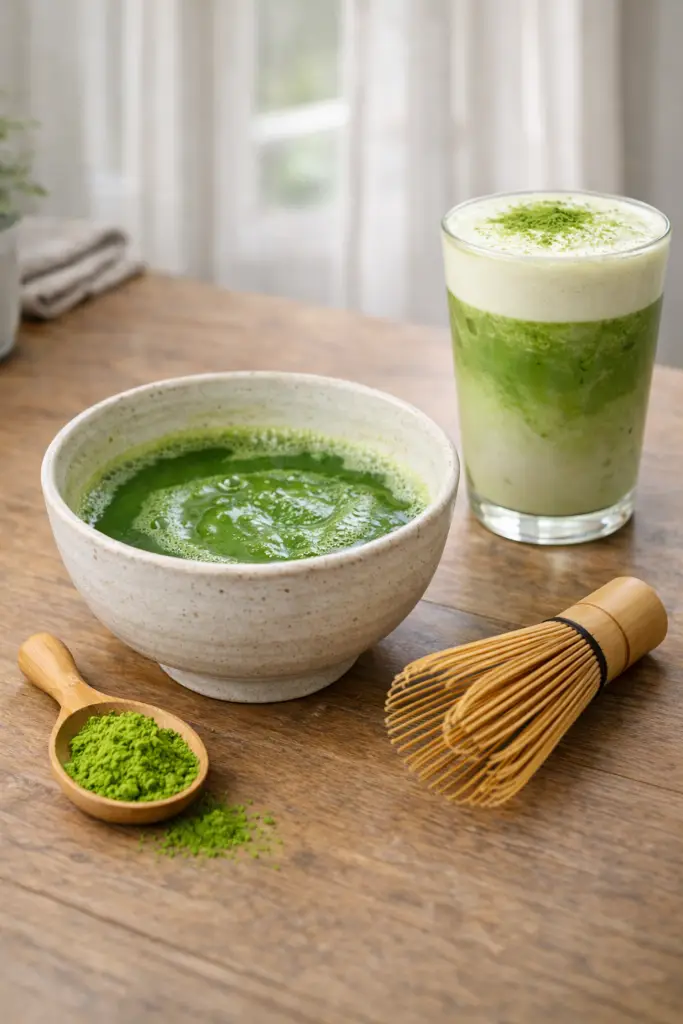
Whisk the matcha with warm water first, then pour the mixture over milk and ice. This simple technique creates a café-style drink that many people now prepare regularly as part of their matcha at home routine.
Some readers also enjoy exploring creative matcha combinations. For example, you can check out this strawberry matcha latte recipe if you want to try a colorful and flavorful twist on matcha drinks at home.
Pro Tip: When preparing iced drinks, whisk the matcha with a small amount of warm water first. This prevents clumps and helps your matcha blend smoothly with milk.
Matcha at Home Recipe Table and Measurements
When preparing matcha at home, having clear measurements makes the process much easier, especially for beginners. Matcha powder is concentrated, so small amounts go a long way. Using simple ratios helps create a balanced drink without making the flavor too strong or too mild.
Basic Matcha Recipe With Exact Measurements
Below is a simple reference table many people use when making matcha drinks at home. These measurements work well whether you’re preparing a traditional tea or using matcha as the base for a latte.
| Ingredient | Standard Amount | Notes |
|---|---|---|
| Matcha powder | ½–1 teaspoon (1–2 grams) | Adjust depending on strength preference |
| Warm water | 2–3 ounces | Ideal temperature around 160–175°F |
| Milk (optional) | ¾–1 cup | For matcha latte variations |
| Sweetener (optional) | 1–2 teaspoons | Honey, maple syrup, or sugar |
This simple ratio helps many beginners feel more confident when making matcha at home, especially when trying different drink styles.
If you enjoy exploring tea-based drinks beyond matcha, you might also discover great ideas like ginger lemon honey tea, another comforting drink often prepared in home kitchens.
Adjusting Strength, Sweetness, and Milk Options
One of the advantages of preparing matcha at home is that you can easily adjust the drink to suit your taste. Some people enjoy a strong matcha flavor, while others prefer a lighter and creamier drink.
Here are a few easy adjustments:
- Stronger flavor: Use 1 teaspoon of matcha instead of ½ teaspoon
- Creamier texture: Add oat milk or whole milk for a smooth latte
- Sweeter drink: Add honey, maple syrup, or vanilla syrup
- Lighter taste: Increase water slightly and reduce matcha powder
Many readers who enjoy matcha also explore other homemade beverages. For example, you can check out this guide to healthy drinks for weight loss to see additional drink ideas people prepare at home.
Pro Tip: If you are new to making matcha at home, start with less matcha powder and slowly adjust the amount. This helps you find the flavor balance you enjoy most.
Common Mistakes When Making Matcha at Home
Many people feel excited when they first start preparing matcha at home, but small mistakes can sometimes affect the taste or texture of the drink. The good news is that most matcha issues are easy to fix once you understand a few simple details. With a bit of practice, making matcha becomes a smooth and relaxing routine rather than a confusing process.
Using Water That Is Too Hot
One of the most common mistakes beginners make while preparing matcha at home is using boiling water. Unlike some teas, matcha powder reacts better to slightly cooler water. If the water is too hot, the drink may taste overly bitter and lose some of its natural smoothness.
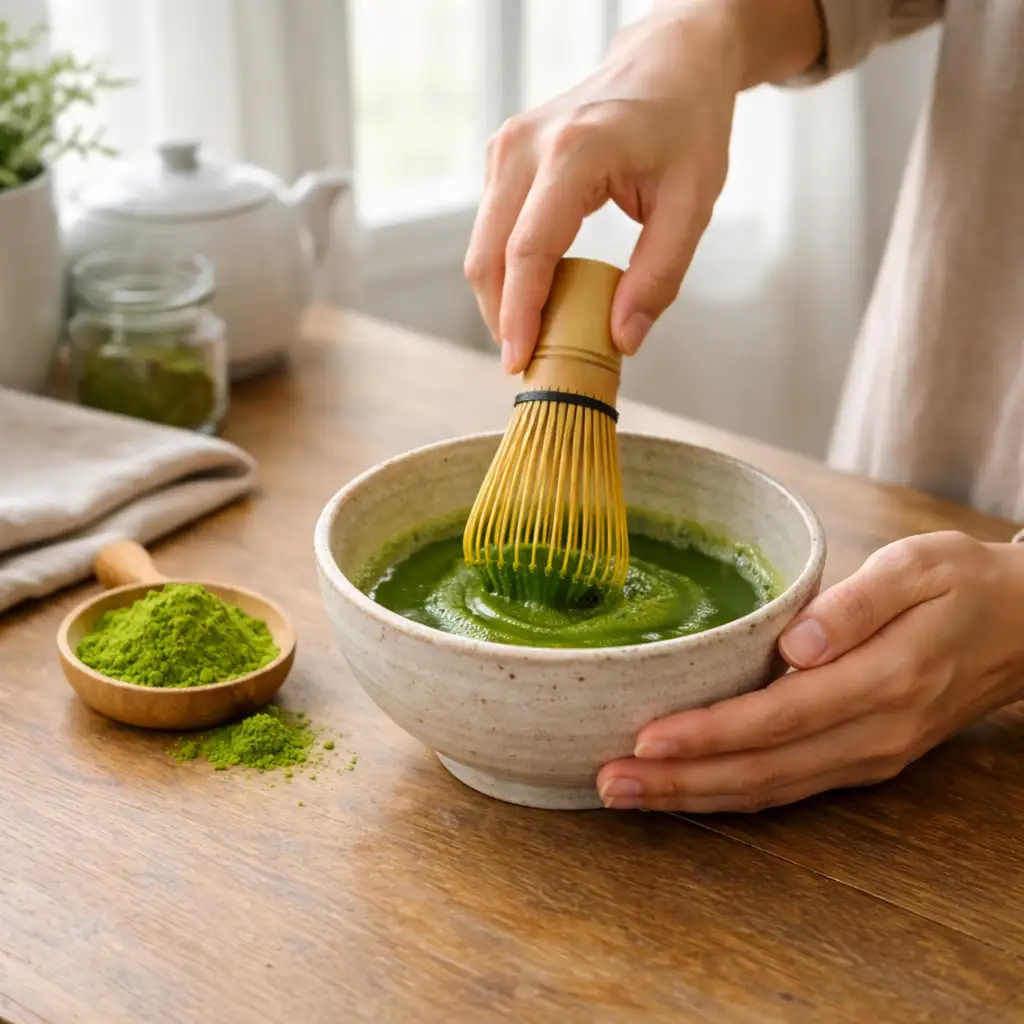
Traditionally, matcha is mixed with water that is warm but not boiling, usually between 160°F and 175°F (70–80°C). This temperature allows the flavor to stay balanced and keeps the bright green color vibrant.
If you enjoy learning about tea preparation in general, you may also want to check out this guide on how to brew green tea, which explains how temperature affects different types of tea.
Why Matcha Sometimes Tastes Bitter
Another issue beginners notice when preparing matcha at home is bitterness. This can happen for several reasons, including poor-quality powder, incorrect measurements, or clumps that were not whisked properly.
Here are a few common causes:
- Using too much matcha powder
- Not sifting the powder before whisking
- Using water that is too hot
- Choosing low-quality matcha powder
A quick solution is to sift the powder before mixing and whisk in a fast zigzag motion. This helps dissolve the powder evenly and improves the texture of matcha prepared at home.
Some readers who enjoy tea often explore related drinks and natural beverages as well. For example, you might discover great ideas like herbal tea benefits if you enjoy trying different teas throughout the day.
Pro Tip: If your matcha tastes too strong, add a small splash of warm milk or extra water. This simple adjustment can soften the flavor without changing the drink completely.
Tips for Storing Matcha Powder at Home
Once you start preparing matcha at home, proper storage becomes an important step in maintaining flavor and freshness. Matcha powder is sensitive to air, heat, light, and moisture. When stored correctly, the powder keeps its vibrant green color and smooth taste for a longer time.
How to Keep Matcha Fresh Longer
The best way to store matcha powder used for matcha at home is in an airtight container placed in a cool, dark location. Many matcha tins are designed specifically to reduce exposure to air and light.
Here are a few simple storage tips:
- Keep matcha in its original sealed tin whenever possible
- Store the container in a cool cupboard away from sunlight
- Close the lid tightly after each use
- Avoid keeping matcha near heat sources such as ovens or stoves
If you enjoy learning about tea ingredients and drink traditions, you might also learn more about matcha health benefits and how matcha has been traditionally enjoyed in tea culture.
Shelf Life and Storage Containers
Most matcha powder used for matcha at home stays fresh for about 1–2 months after opening when stored properly. Unopened tins typically last longer, but freshness always depends on how the powder is protected from air and humidity.
A few storage container options include:
| Storage Method | Why It Helps |
|---|---|
| Original matcha tin | Designed to limit air exposure |
| Airtight glass jar | Helps seal in freshness |
| Opaque container | Protects matcha from light |
Many readers who enjoy preparing matcha at home also experiment with other homemade beverages. If you like trying different drink recipes, you may want to discover great ideas like healthy drinks for weight loss that can also be prepared easily in your kitchen.
Pro Tip: If your kitchen gets warm, storing matcha in the refrigerator inside a sealed container can help preserve freshness. Just allow the container to reach room temperature before opening it to avoid moisture buildup.
Why Many People Prefer Matcha at Home Instead of Coffee Shop Drinks
For many tea lovers, preparing matcha at home becomes more than just a way to make a drink. It often turns into a small daily ritual that feels calm, creative, and flexible. Instead of relying on café visits, people enjoy the freedom of making their favorite matcha drinks exactly the way they like them.
Cost Comparison Between Homemade Matcha and Café Matcha
One practical reason people start preparing matcha at home is cost. Coffee shops often charge several dollars for a single matcha latte, while one small tin of matcha powder can produce many cups.
Here is a simple comparison:
| Option | Average Cost | Cups per Purchase |
|---|---|---|
| Coffee shop matcha latte | $4–$6 per drink | 1 |
| Matcha powder tin | $20–$30 | 25–40 cups |
When people prepare matcha at home, the cost per cup usually becomes much lower. This makes it easier to enjoy matcha regularly without the expense of frequent café purchases.
Many readers who start experimenting with homemade drinks also explore other café-style beverages. For example, you might check out this blueberry latte recipe if you enjoy trying creative drinks at home.
Customizing Flavor, Milk, and Sweetness
Another reason people enjoy preparing matcha at home is the ability to customize every part of the drink. In coffee shops, sweetness levels and milk choices are limited. At home, you can adjust everything based on your taste preferences.
Here are a few ways people customize their matcha drinks:
- Choose plant-based milks such as oat, almond, or coconut
- Adjust sweetness with honey, maple syrup, or vanilla syrup
- Add ice for refreshing summer drinks
- Blend matcha into smoothies or latte variations
For those who enjoy experimenting with beverages, exploring different drink recipes can be part of the fun. You might also discover great ideas like Italian soda drinks if you enjoy making café-style drinks at home.
Pro Tip: When making matcha at home regularly, prepare a small “matcha station” in your kitchen with your whisk, powder, and bowl together. This makes the daily preparation quick and enjoyable.
Frequently Asked Questions About Matcha at Home
Can I Make Matcha at Home Without a Bamboo Whisk?
Yes, you can still prepare matcha at home even if you do not own a traditional bamboo whisk. While a whisk helps create the smoothest texture, several everyday tools work well.Some practical alternatives include:A small kitchen whiskA handheld milk frotherA jar with a lid for shaking matcha and waterA blender for larger drinksThese simple tools allow beginners to start making matcha without purchasing specialized equipment.
What Milk Works Best for Matcha Lattes?
When preparing matcha at home, many people enjoy turning their matcha tea into a latte. Both dairy and plant-based milks can work well depending on your taste.Popular options include:Oat milk for a creamy textureAlmond milk for a lighter flavorCoconut milk for a slightly tropical noteWhole milk for a classic café-style latteIf you enjoy exploring different drink styles, you may also discover great ideas like this strawberry matcha latte recipe, which adds a fruity twist to homemade matcha drinks.
Why Does Homemade Matcha Sometimes Taste Bitter?
A slightly bitter flavor can occur when preparing matcha at home if the powder is mixed with boiling water or if too much matcha is used. Lowering the water temperature and whisking the powder thoroughly usually improves the taste.Some readers who explore matcha also become curious about how it compares with other teas. If that interests you, you might learn how much caffeine green tea contains to better understand the differences between tea drinks.
How Much Matcha Powder Should I Use?
Most beginners preparing matcha at home start with about ½ to 1 teaspoon of matcha powder per cup. This amount creates a balanced flavor that can be adjusted depending on personal preference.
Is It Cheaper to Make Matcha at Home?
In many cases, yes. Preparing matcha at home often costs less than buying matcha drinks from cafés. One small tin of matcha powder can produce many servings, making homemade matcha a practical option for regular tea drinkers.Pro Tip: If you’re experimenting with matcha drinks, write down the measurements you like best. This makes it easier to recreate your favorite matcha at home later.
Conclusion: Enjoying Matcha at Home as a Simple Daily Ritual
Learning to prepare matcha at home can turn an ordinary drink into a small, enjoyable routine. With just a few ingredients and simple tools, anyone can create a smooth cup of matcha without complicated steps. Over time, many people find that making matcha at home becomes a relaxing part of their morning or afternoon break.
Another benefit of preparing matcha at home is the freedom to experiment. Some days you might enjoy a traditional bowl of matcha with warm water, while other days you might prefer an iced latte or a creative variation with fruit flavors.
If you’re interested in expanding your tea knowledge even further, you can learn more about matcha health benefits and how matcha has traditionally been enjoyed in tea culture.
Many readers who enjoy matcha also explore other homemade drink ideas. For example, you can discover great ideas like healthy drinks for weight loss if you enjoy preparing refreshing beverages in your kitchen.
If you’d like to explore more recipes and drink inspiration, feel free to connect with the HeartlyRecipes community. You can follow us on Facebook for new drink ideas or browse our Pinterest boards for creative recipes.
Preparing matcha doesn’t require perfection. With practice, the process becomes simple, personal, and enjoyable. Whether you prefer traditional tea or café-style drinks, matcha at home offers a flexible and satisfying way to enjoy this vibrant green tea.