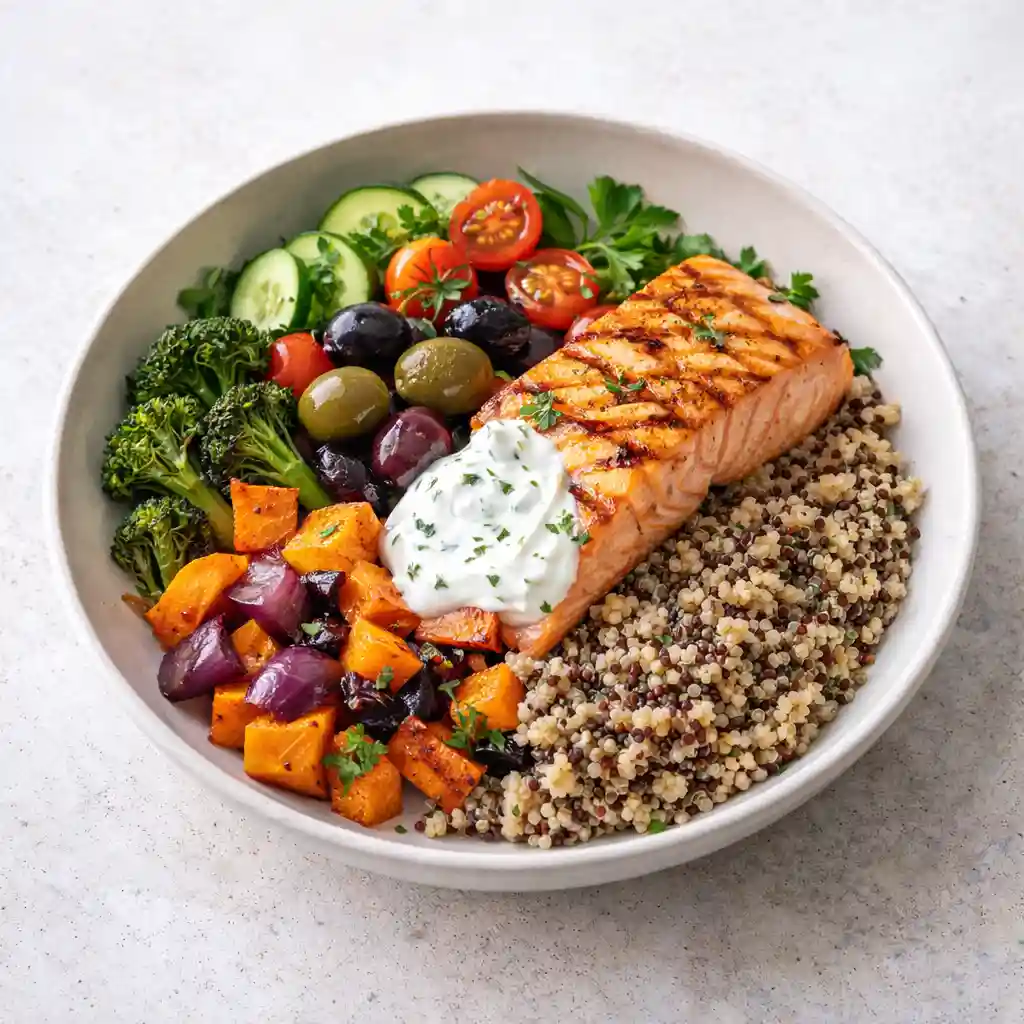
When I first started noticing how often mediterranean diet recipes were popping up on TikTok meal prep videos and Reddit cooking threads, I realized something interesting. People weren’t just looking for another trend. They were searching for simple, real food they could cook at home without complicated rules. Bowls of colorful vegetables, olive oil drizzled over warm bread, grilled fish with lemon, and hearty bean dishes kept showing up again and again. That curiosity inspired me to put together this guide.
This article is all about mediterranean diet recipes and how to bring them into everyday American kitchens in a practical, realistic way. Whether you’re a busy parent planning weekly dinners, someone exploring heart-friendly meal ideas, or simply curious about what the Mediterranean way of eating actually looks like, you’re in the right place.
Here, you’ll learn:
- What mediterranean diet recipes really include (and what they don’t).
- Examples of Mediterranean meals for breakfast, lunch, and dinner.
- How this eating pattern is often discussed in relation to lupus and IVF, in a respectful and informational way.
- Easy, beginner-friendly recipes and meal planning tips.
- Common mistakes people make when trying the Mediterranean diet.
We’ll also answer important questions like: What are examples of Mediterranean diet meals? What do you eat for breakfast on a Mediterranean? Is a Mediterranean diet good for lupus? And what is the Mediterranean diet for IVF?
Throughout this guide, I’ll keep things simple, balanced, and practical. This isn’t about strict dieting or dramatic claims. It’s about learning how mediterranean diet recipes focus on vegetables, whole grains, legumes, olive oil, seafood, and fresh ingredients in a sustainable way.
If you enjoy exploring healthy meal ideas, you can also check out our collection of wholesome dishes here: recipes for more inspiration.
Let’s begin by understanding what mediterranean diet recipes actually mean and the core principles behind this timeless way of eating.
This recipe collection is shared for informational purposes and is not a substitute for medical advice.
What Are Mediterranean Diet Recipes?
Mediterranean diet recipes reflect the traditional eating patterns of countries surrounding the Mediterranean Sea, including Greece, southern Italy, and parts of Spain. Rather than being a strict meal plan, this approach represents a style of cooking that values freshness, seasonality, and simple preparation methods. Grilling, roasting, sautéing in olive oil, and serving raw vegetables with herbs are common techniques used in mediterranean diet recipes.
Core Principles Behind the Mediterranean Way of Eating
One key principle behind mediterranean diet recipes is prioritizing plant-based foods. Vegetables often take center stage on the plate, supported by whole grains like farro or brown rice and protein sources such as lentils or fish. Healthy fats, especially extra virgin olive oil, form the foundation of this eating style, replacing butter or heavily processed oils in many dishes.
Another important idea is moderation. Dairy appears in small amounts, usually as yogurt or cheese, and sweets are occasional rather than daily. This balanced structure is why many families feel mediterranean diet recipes are realistic for long-term habits instead of short-term dieting.
Pro Tip: When starting out, build your plate by filling half with vegetables, one quarter with whole grains, and one quarter with protein like beans or fish. This simple visual guide keeps mediterranean diet recipes balanced without complicated tracking.
Key Ingredients Used in Mediterranean Cooking
The ingredients behind mediterranean diet recipes are simple yet full of flavor. Staples include tomatoes, leafy greens, cucumbers, eggplant, zucchini, olives, chickpeas, white beans, and fresh herbs like parsley and oregano. Seafood such as salmon or sardines appears regularly, while red meat is used sparingly.
Whole grains also play a big role. Think oats for breakfast, whole wheat bread, bulgur, and barley for lunch or dinner. Nuts and seeds add texture and healthy fats, making mediterranean diet recipes satisfying and nutrient-dense without relying on heavy sauces.
Because these ingredients are widely available in U.S. grocery stores, mediterranean diet recipes remain accessible for most households. You don’t need specialty imports to get started. With a few core staples and fresh produce, you can prepare meals that reflect the heart of this pattern while fitting your family’s routine.
This recipe collection is shared for informational purposes and is not a substitute for medical advice.
Print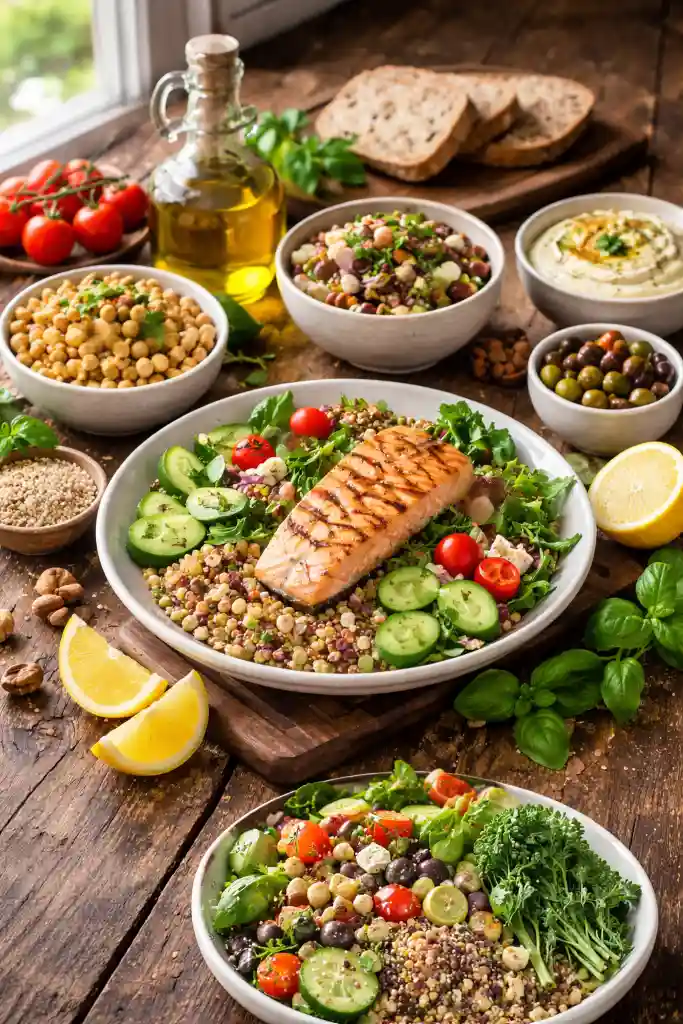
Mediterranean Diet Recipes: 9 Simple & Healthy Meals
Mediterranean diet recipes made simple with easy breakfast ideas, balanced lunches, seafood dinners, and practical weekly meal planning tips. Learn how to build meals around vegetables, whole grains, legumes, olive oil, and lean proteins in a sustainable and realistic way.
- Total Time: 35 minutes
- Yield: 4 servings 1x
Ingredients
Instructions
1. Fill half your plate with vegetables such as tomatoes, cucumbers, leafy greens, zucchini, or peppers. 2. Add one quarter whole grains like brown rice, quinoa, oats, or whole wheat pasta. 3. Include one quarter protein from legumes (chickpeas, lentils, beans), fish (salmon, sardines), poultry, or eggs. 4. Use extra virgin olive oil as the primary fat for cooking and dressing. 5. Limit red meat and highly processed foods. 6. Rotate ingredients weekly to create simple Mediterranean-style breakfasts, lunches, and dinners. 7. Plan meals ahead using a 7-day structure to simplify grocery shopping and reduce food waste.
Notes
This Mediterranean diet recipe collection is shared for informational purposes only and is not a substitute for medical advice. For specific health concerns such as lupus or IVF, consult a qualified healthcare professional before making dietary changes. Focus on balance, variety, and whole foods for long-term sustainability.
- Prep Time: 15 minutes
- Cook Time: 20 minutes
- Category: Main Course
- Method: Mediterranean Style Cooking
- Cuisine: Mediterranean
Nutrition
- Serving Size: 1 balanced plate
- Calories: 450
- Sugar: 6g
- Sodium: 420mg
- Fat: 18g
- Saturated Fat: 3g
- Unsaturated Fat: 14g
- Trans Fat: 0g
- Carbohydrates: 45g
- Fiber: 8g
- Protein: 28g
- Cholesterol: 55mg
What Are Examples of Mediterranean Diet Meals?
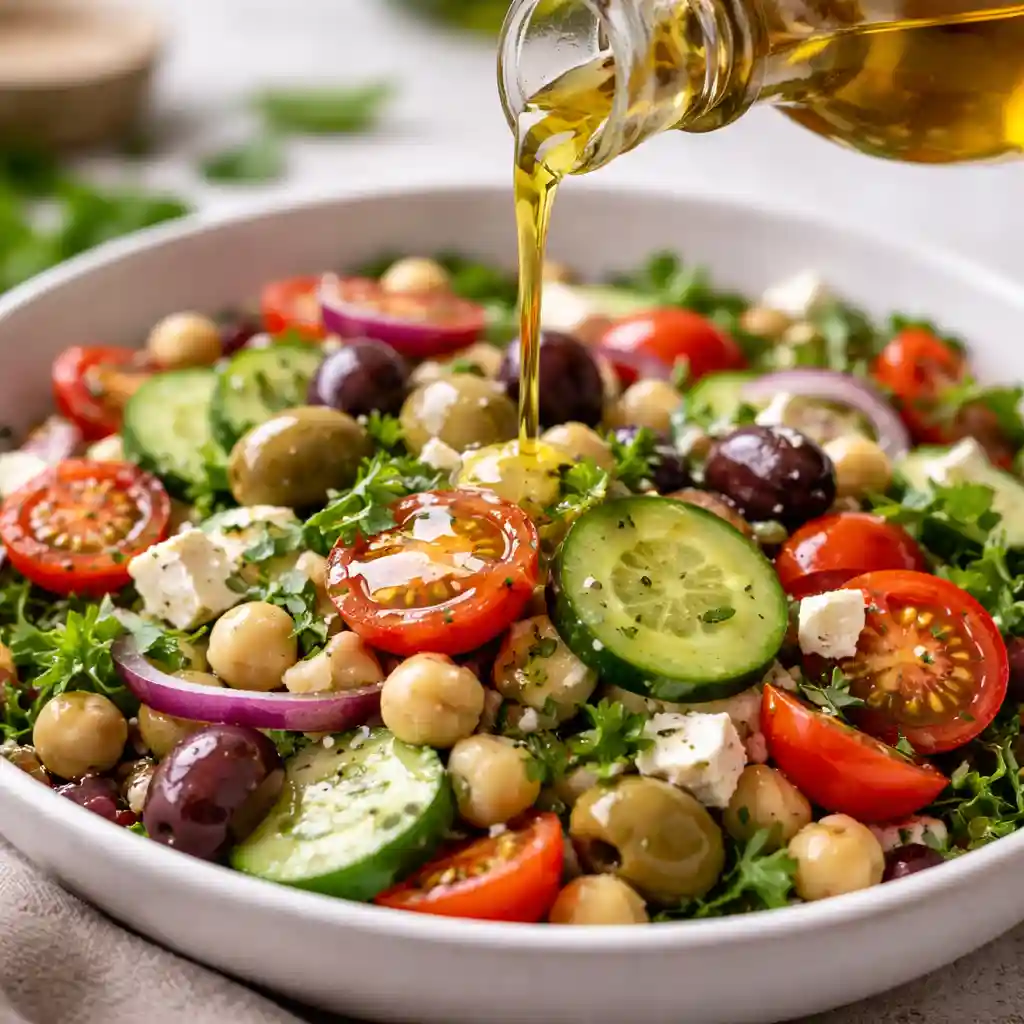
When people first look into mediterranean diet recipes, they often wonder what a full day of meals actually looks like. In practice, mediterranean diet recipes can be simple combinations of vegetables, whole grains, legumes, and seafood arranged in balanced portions. For lunch, you might prepare a large salad with cucumbers, tomatoes, olives, chickpeas, and grilled chicken, drizzled with olive oil and lemon. Dinners in mediterranean diet recipes often feature baked fish with roasted vegetables and a side of quinoa or brown rice.
Many families rotate a few reliable mediterranean diet recipes throughout the week to keep things practical. For example, a hearty bean soup with herbs and vegetables can serve as both lunch and dinner. If you enjoy comforting legume-based meals, you can check out this simple inspiration: bean soup recipes crockpot which pairs well with Mediterranean-style eating.
Seafood is another strong example within mediterranean diet recipes. Grilled salmon with garlic, parsley, and a squeeze of fresh lemon reflects the coastal roots of this cuisine. On busier evenings, a whole-grain pasta tossed with sautéed spinach, cherry tomatoes, and olive oil fits naturally into mediterranean diet recipes without feeling complicated.
Simple Weekly Mediterranean Meal Plan
Here’s a basic example of how mediterranean diet recipes might look across a few days:
| Day | Lunch | Dinner |
|---|---|---|
| Monday | Greek-style salad with chickpeas | Baked salmon + roasted zucchini |
| Tuesday | Lentil soup + whole grain bread | Grilled chicken + tomato cucumber salad |
| Wednesday | Quinoa bowl with vegetables | Whole wheat pasta + spinach + olive oil |
This flexible structure shows how mediterranean diet recipes can repeat ingredients in creative ways. Instead of cooking something entirely new every night, you reuse vegetables, grains, and proteins in different combinations.
Pro Tip: Cook a large batch of grains like brown rice or quinoa at the start of the week. It makes assembling mediterranean diet recipes faster and helps reduce food waste.
Because mediterranean diet recipes focus on whole ingredients rather than packaged foods, many people say they feel more satisfied after meals. The combination of fiber, healthy fats, and protein tends to keep hunger steady throughout the day, making this pattern easier to maintain long term.
This recipe collection is shared for informational purposes and is not a substitute for medical advice.
What Do You Eat for Breakfast on a Mediterranean?
Breakfast is often the meal that surprises people when they begin trying Mediterranean-style eating. Instead of sugary cereals or heavily processed pastries, mornings focus on whole grains, fruit, healthy fats, and moderate protein. Many mediterranean diet recipes highlight balance and steady energy that carries you through the day rather than quick spikes and crashes.
Balanced Mediterranean Breakfast Ideas
A classic example within mediterranean diet recipes is plain Greek yogurt topped with fresh berries, a drizzle of honey, and a handful of walnuts. This combination offers protein, fiber, and satisfying fats in one simple bowl. Another easy option is whole grain toast with mashed avocado, sliced tomatoes, and a light sprinkle of olive oil and herbs.
Eggs are also common in mediterranean diet recipes, especially when paired with vegetables. A spinach and tomato omelet cooked gently in olive oil, served with whole grain bread, reflects the traditional approach to morning meals. If you’d like guidance on preparation, you can explore helpful tips in a resource like how to boil eggs perfectly.
Quick Morning Recipes with Yogurt, Eggs, and Whole Grains
For busy mornings, overnight oats fit naturally into mediterranean diet recipes. Rolled oats soaked in milk or yogurt, combined with chia seeds and fruit, create a ready-to-eat breakfast that requires minimal effort. You can find inspiration in options similar to a healthy overnight oats recipe for weight loss while keeping the Mediterranean balance in mind.
Some people on Reddit and Quora mention that shifting toward mediterranean diet recipes at breakfast helps them avoid mid-morning crashes. While individual experiences vary, meals built around fiber, protein, and healthy fats tend to feel more satisfying than refined carbohydrates alone.
Pro Tip: Keep breakfast simple by prepping ingredients the night before. Wash fruit, portion nuts, and pre-cook grains so mornings feel calm instead of rushed.
Ultimately, mediterranean diet recipes for breakfast are flexible. You don’t have to follow a strict template. Focus on whole foods, natural flavors, and balanced portions, and you’ll stay aligned with this pattern in a sustainable way.
This recipe collection is shared for informational purposes and is not a substitute for medical advice.
Essential Ingredients in Mediterranean Diet Recipes
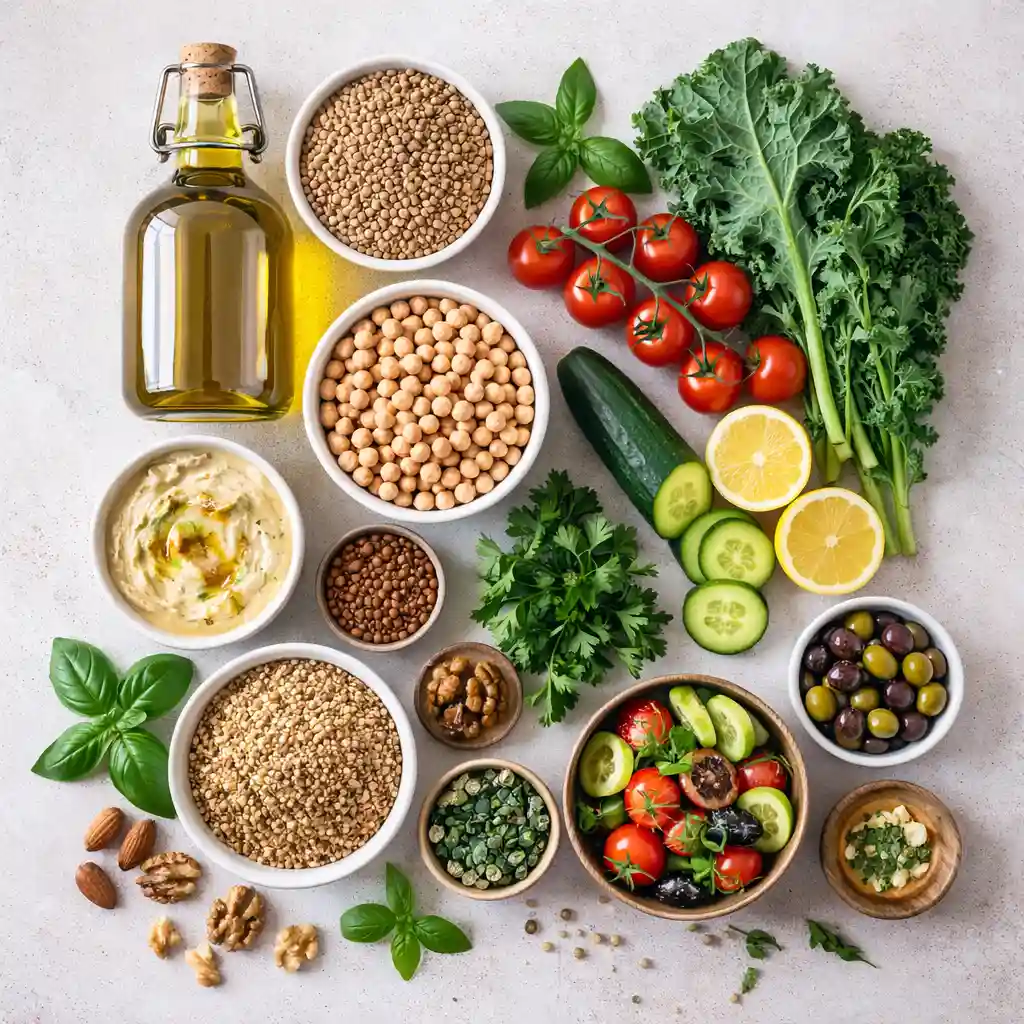
To understand why mediterranean diet recipes are so widely appreciated, it helps to look closely at the ingredients that shape them. At the heart of this cooking style is extra virgin olive oil, used for sautéing vegetables, dressing salads, and finishing dishes with smooth richness. Many mediterranean diet recipes rely on simple combinations rather than heavy sauces, allowing herbs, citrus, and quality fats to bring out natural flavor.
Healthy Fats: Olive Oil, Nuts, and Seeds
One defining feature of mediterranean diet recipes is the steady use of plant-based fats. Olive oil replaces butter in most meals, while almonds, walnuts, and sesame seeds add texture and depth. In many traditional kitchens, a drizzle of oil over ripe tomatoes or warm whole grain bread is enough to complete the plate. You might even see this approach discussed in simple concepts like the olive oil trick, which highlights how central this ingredient can be.
Because mediterranean diet recipes regularly include nuts and seeds, they naturally combine healthy fats with fiber and protein. This balance helps meals feel satisfying without being overly heavy, especially when paired with vegetables and legumes.
Fresh Produce, Legumes, and Lean Proteins
Vegetables remain central to mediterranean diet recipes. Eggplant, zucchini, tomatoes, cucumbers, leafy greens, and bell peppers often appear daily. Legumes such as lentils, chickpeas, and white beans are equally important, offering affordable and versatile protein sources. A quick chickpea and cucumber salad tossed with olive oil and lemon fits seamlessly into this pattern.
Seafood also plays a meaningful role. Grilled fish with herbs or baked sardines with garlic are traditional examples found within mediterranean diet recipes along coastal regions. Poultry appears in moderation, while red meat is usually reserved for occasional meals rather than daily use.
Pro Tip: When shopping, fill your cart with vegetables first. Then add legumes, whole grains, fish, and olive oil. If most of your basket reflects whole ingredients, your mediterranean diet recipes will naturally stay balanced.
Many people transitioning to mediterranean diet recipes notice their grocery lists become simpler over time. Instead of chasing specialty items, they focus on seasonal produce, beans, whole grains, and quality olive oil. This ingredient-driven approach keeps cooking practical, adaptable, and easy to maintain in everyday life.
This recipe collection is shared for informational purposes and is not a substitute for medical advice.
Mediterranean Diet Recipes for Special Health Considerations
As mediterranean diet recipes continue gaining attention, many people ask how this eating pattern connects to specific health concerns. While this style of eating is not a treatment or cure for any condition, mediterranean diet recipes are often discussed in wellness spaces because they emphasize whole foods, healthy fats, and balanced portions. It’s important to approach these conversations thoughtfully and remember that every person’s medical needs are different.
Is a Mediterranean Diet Good for Lupus?
You may have seen online discussions asking whether mediterranean diet recipes are suitable for lupus. From a general nutrition standpoint, this pattern highlights vegetables, legumes, fish, olive oil, and whole grains—foods commonly included in balanced dietary approaches. Some individuals with autoimmune conditions share that mediterranean diet recipes feel supportive for steady energy and digestion. However, lupus is complex and varies greatly from person to person.
Rather than viewing mediterranean diet recipes as a solution, it’s more accurate to see them as a structured way to build balanced meals around minimally processed ingredients. Anyone managing lupus should work closely with a qualified healthcare provider or registered dietitian before making meaningful dietary changes.
What Is the Mediterranean Diet for IVF?
Another frequent question involves mediterranean diet recipes and IVF. On social media and fertility forums, the phrase “Mediterranean diet for IVF” often refers to following a balanced eating pattern rich in vegetables, fruits, whole grains, legumes, fish, and healthy fats. In that sense, mediterranean diet recipes are viewed as nutrient-diverse and centered on whole foods.
Some healthcare professionals have explored dietary patterns similar to mediterranean diet recipes in broader reproductive health discussions. Still, IVF outcomes depend on many variables, including age, medical history, and clinical guidance. Nutrition can be part of an overall lifestyle plan, but it does not determine results on its own.
Pro Tip: If you’re adjusting mediterranean diet recipes to align with a personal health concern, keep a simple food journal. Track meals and how you feel, then review that information with your healthcare provider for tailored guidance.
In summary, mediterranean diet recipes can provide a balanced framework for everyday eating. However, when conditions like lupus or fertility treatments are involved, professional medical advice should always guide decisions.
This recipe collection is shared for informational purposes and is not a substitute for medical advice.
Easy Mediterranean Diet Recipes for Beginners
When someone decides to try mediterranean diet recipes for the first time, the biggest concern is usually complexity. People imagine long ingredient lists or unfamiliar cooking techniques. In reality, mediterranean diet recipes are often some of the simplest meals you can prepare. They rely on everyday ingredients and straightforward methods like roasting vegetables, grilling fish, or tossing grains with olive oil and herbs.
I’ve noticed in online cooking groups that beginners succeed faster when they start small. Instead of changing every meal at once, they test two or three mediterranean diet recipes during the week. A sheet pan of roasted vegetables with chickpeas and olive oil is one easy starting point. Pair that with brown rice or quinoa, and dinner is done without stress.
30-Minute Mediterranean Dinner Ideas
Many mediterranean diet recipes can be prepared in under 30 minutes. For example, sauté garlic in olive oil, add cherry tomatoes and spinach, then toss with whole wheat pasta. Finish with a sprinkle of feta cheese. Another quick option within mediterranean diet recipes is grilled chicken seasoned with oregano and lemon, served alongside a cucumber-tomato salad.
If meal planning feels overwhelming, you might find it helpful to review structured prep strategies like this guide: weight loss meal prep which aligns well with batch cooking principles used in mediterranean diet recipes.
Budget-Friendly Mediterranean Cooking Tips
One reason mediterranean diet recipes remain sustainable is affordability. Beans, lentils, oats, rice, and seasonal vegetables are typically budget-friendly. Buying dried legumes instead of canned versions can further reduce costs while keeping mediterranean diet recipes nutritious and filling.
Many families on Reddit mention that repeating base ingredients across multiple mediterranean diet recipes during the week helps save both time and money. For instance, roasted vegetables prepared on Sunday can be used in salads, grain bowls, and wraps over several days.
Pro Tip: Choose three core ingredients each week—like chickpeas, spinach, and brown rice—and build multiple mediterranean diet recipes around them. This keeps your shopping list simple and prevents food waste.
Starting with mediterranean diet recipes doesn’t require perfection. It’s about building confidence in the kitchen, experimenting with flavors, and gradually creating meals that feel natural and enjoyable for your household.
This recipe collection is shared for informational purposes and is not a substitute for medical advice.
Popular Mediterranean Dishes Trending Online
If you spend time on TikTok or scroll through food threads on Reddit, you’ll notice how often Mediterranean-style bowls show up in colorful meal prep videos. People are sharing grain bowls layered with hummus, roasted vegetables, cucumbers, olives, and grilled salmon. These posts often highlight how mediterranean diet recipes feel practical, fresh, and easy to customize based on what’s already in the fridge.
One reason these meals trend so well online is visual appeal. Bright tomatoes, leafy greens, golden olive oil, and flaky fish create plates that look vibrant without complicated presentation. Many home cooks say mediterranean diet recipes photograph beautifully while still being realistic for everyday dinners.
TikTok and Reddit-Inspired Mediterranean Bowls
A popular format right now is the “Mediterranean bowl.” It typically starts with a base of brown rice or quinoa, followed by chickpeas or grilled chicken, chopped vegetables, olives, and a yogurt-based sauce. This structure makes mediterranean diet recipes adaptable for different dietary preferences, including vegetarian or seafood-focused meals.
Some creators also share quick hacks to simplify preparation, like using pre-washed greens or canned beans to cut prep time in half. While shortcuts can be helpful, the foundation of mediterranean diet recipes still revolves around whole ingredients and balanced portions.
Traditional vs Modern Mediterranean Recipes
There’s also an interesting contrast between traditional mediterranean diet recipes and modern interpretations. Traditional meals often involve family-style serving, fresh bread, seasonal vegetables, and slow-cooked legumes. Modern versions sometimes combine global flavors or add convenience items. Both styles can fit within mediterranean diet recipes as long as the core principles—vegetables, whole grains, healthy fats, and moderate protein—remain intact.
Pro Tip: When trying trending mediterranean diet recipes online, compare the ingredient list to the basics: vegetables, legumes, whole grains, olive oil, and fish or poultry. If those elements are present, you’re likely staying aligned with the Mediterranean pattern.
Ultimately, mediterranean diet recipes continue gaining popularity because they blend tradition with flexibility. Whether inspired by social media or passed down through generations, these meals remain grounded in simple ingredients that most families can prepare without stress.
This recipe collection is shared for informational purposes and is not a substitute for medical advice.
Mediterranean Diet Recipes Meal Planning Guide
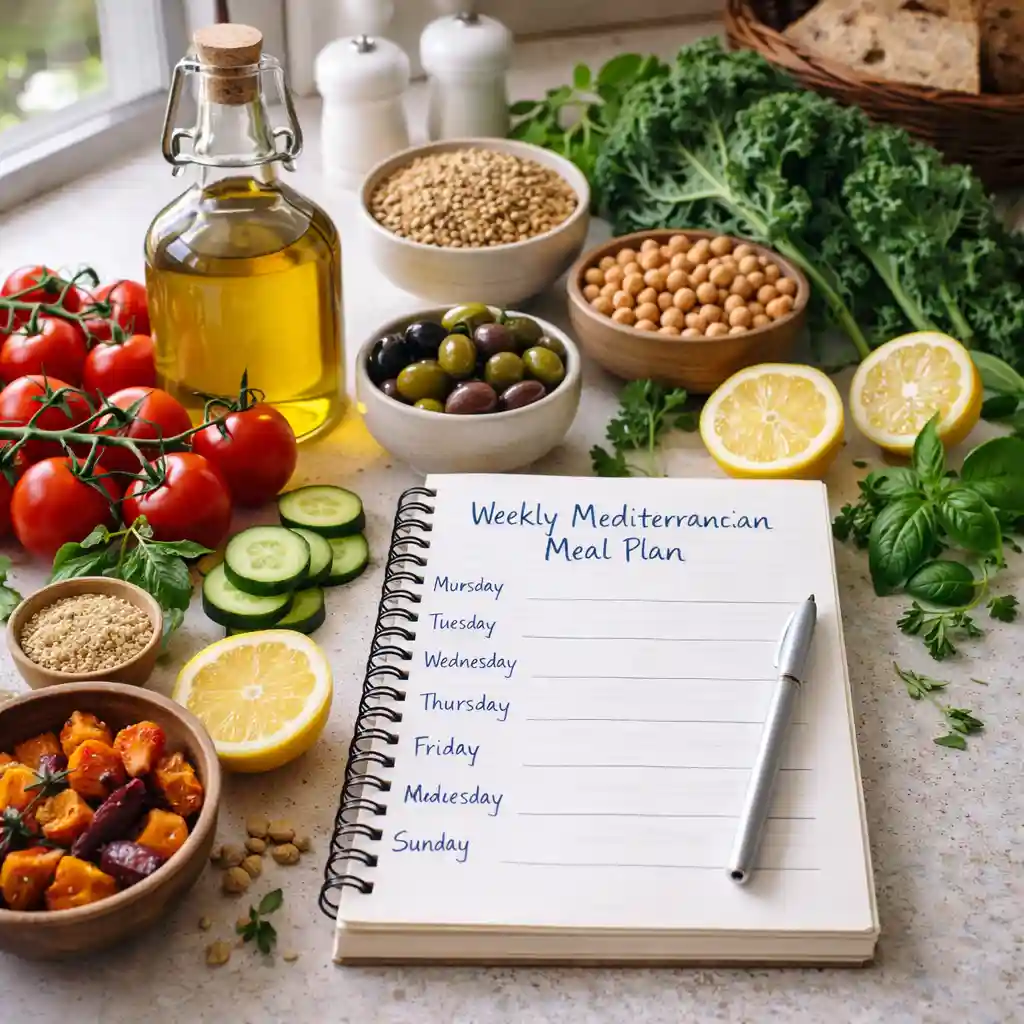
Planning ahead makes mediterranean diet recipes easier to follow throughout the week. Instead of deciding what to cook each night, many families choose two or three base ingredients and build multiple mediterranean diet recipes around them. This approach reduces stress, saves time, and keeps meals balanced without feeling repetitive.
A practical way to organize mediterranean diet recipes is by structuring your week around themes. For example, you might plan one seafood dinner, two legume-based meals, one poultry dish, and several vegetable-forward lunches. By repeating core ingredients like olive oil, tomatoes, cucumbers, spinach, chickpeas, and whole grains, mediterranean diet recipes naturally come together without complicated shopping lists.
7-Day Mediterranean Meal Plan Overview
Here’s a simplified example of how mediterranean diet recipes might look across a full week:
| Day | Breakfast | Lunch | Dinner |
|---|---|---|---|
| Mon | Greek yogurt + fruit | Chickpea salad | Grilled salmon + vegetables |
| Tue | Oats + nuts | Lentil soup | Chicken + quinoa bowl |
| Wed | Eggs + whole grain toast | Mediterranean bowl | Baked white fish + greens |
| Thu | Yogurt + seeds | Leftover grain bowl | Stuffed peppers with beans |
| Fri | Oats + berries | Tomato cucumber salad | Whole wheat pasta + spinach |
| Sat | Omelet + herbs | Hummus wrap | Grilled shrimp + roasted zucchini |
| Sun | Yogurt + walnuts | Bean soup | Roast chicken + salad |
This structure keeps mediterranean diet recipes consistent while allowing flexibility. You can swap proteins, rotate vegetables, or adjust portions depending on your household’s needs.
Grocery List for Mediterranean Cooking
Creating a weekly grocery list simplifies mediterranean diet recipes even further. Focus on categories instead of individual meals:
- Vegetables: tomatoes, cucumbers, spinach, zucchini, bell peppers
- Legumes: chickpeas, lentils, white beans
- Whole grains: brown rice, quinoa, oats, whole wheat bread
- Proteins: salmon, sardines, chicken, eggs
- Healthy fats: extra virgin olive oil, almonds, walnuts
Many people find that once they follow mediterranean diet recipes for a few weeks, grocery shopping becomes more predictable. Fresh produce and pantry staples form the base, while specialty items are minimal.
Pro Tip: Write your meal plan before grocery shopping and check your pantry first. Building mediterranean diet recipes from ingredients you already have helps reduce waste and control costs.
By approaching mediterranean diet recipes with a clear weekly outline, you make healthy cooking manageable and sustainable rather than overwhelming.
This recipe collection is shared for informational purposes and is not a substitute for medical advice.
Common Mistakes to Avoid with Mediterranean Diet Recipes
As more people begin trying Mediterranean-style eating, a few common mistakes tend to surface. One of the biggest misunderstandings is assuming that mediterranean diet recipes automatically allow unlimited portions of pasta, bread, and olive oil. While these foods are certainly included, balance is still central. When refined grains take over the plate, mediterranean diet recipes drift away from their original vegetable-forward roots.
Another frequent issue is overlooking portion awareness. Even though mediterranean diet recipes emphasize whole, minimally processed foods, quantity still matters. Olive oil, for example, is a foundational ingredient, but pouring it generously without measuring can add more calories than intended. Moderation keeps meals aligned with the traditional pattern rather than turning them into something heavier.
Some people also rely too heavily on packaged “Mediterranean-style” products. Store-bought dips, flavored crackers, or frozen entrees labeled as Mediterranean don’t always reflect the simplicity behind authentic mediterranean diet recipes. Checking ingredient labels and choosing whole foods helps maintain the integrity of the approach.
Portion Control and Hidden Processed Foods
Traditional mediterranean diet recipes put vegetables at the center, with grains and protein playing supportive roles. When vegetables become an afterthought, the balance shifts. A plate dominated by white pasta with only a small serving of produce doesn’t truly reflect how mediterranean diet recipes were originally structured.
Hidden sugars in bottled sauces and dressings can also be misleading. Some products marketed for mediterranean diet recipes include refined oils or sweeteners. Preparing a quick dressing with olive oil, lemon juice, and herbs keeps flavors clean and consistent with the Mediterranean style.
Balancing Macronutrients the Mediterranean Way
A final mistake is limiting protein variety. While mediterranean diet recipes often highlight fish and legumes, it’s important to rotate options such as eggs, poultry, beans, and seafood. This keeps meals interesting and nutritionally diverse.
Pro Tip: Before serving, take a quick look at your plate. If mediterranean diet recipes are built properly, you should see plenty of vegetables, a source of protein, whole grains, and a moderate amount of healthy fat. That simple visual check helps maintain balance without complicated tracking.
By avoiding these common pitfalls, mediterranean diet recipes stay practical, balanced, and sustainable. Small adjustments in portions, ingredient quality, and variety can make a steady difference over time.
This recipe collection is shared for informational purposes and is not a substitute for medical advice.
Frequently Asked Questions About Mediterranean Diet Recipes
Before wrapping up, let’s clearly answer some of the most common questions people ask about mediterranean diet recipes. These questions often appear on Quora threads, Reddit discussions, and even in everyday conversations when someone starts changing their eating habits.
What are examples of Mediterranean diet meals?
Examples of mediterranean diet recipes include grilled salmon with roasted vegetables, lentil soup with whole grain bread, chickpea and cucumber salad with olive oil, and whole wheat pasta tossed with spinach and tomatoes. Breakfast might feature Greek yogurt with fruit and nuts, while lunch could be a grain bowl layered with beans, vegetables, and a light dressing. The focus in mediterranean diet recipes is always on whole ingredients, balanced portions, and simple preparation methods.
What do you eat for breakfast on a Mediterranean?
Breakfast within mediterranean diet recipes usually includes whole grains, fruit, healthy fats, and moderate protein. Common options are plain yogurt with berries and walnuts, oatmeal topped with seeds, or eggs with sautéed vegetables and whole grain toast. Unlike highly processed breakfasts, mediterranean diet recipes aim for steady energy rather than quick spikes from refined sugar.
Is a Mediterranean diet good for lupus?
Many people ask whether mediterranean diet recipes are suitable for lupus. While this eating pattern emphasizes vegetables, legumes, fish, and olive oil—foods often associated with balanced nutrition—it is not a treatment for lupus. Some individuals report feeling better when following mediterranean diet recipes, but lupus is a serious autoimmune condition that requires medical supervision. Dietary changes should always be discussed with a qualified healthcare provider.
What is the Mediterranean diet for IVF?
The phrase “Mediterranean diet for IVF” generally refers to following mediterranean diet recipes that prioritize nutrient-dense whole foods while limiting processed products. Some fertility discussions highlight balanced dietary patterns similar to mediterranean diet recipes because they include healthy fats, plant foods, and lean proteins. However, IVF outcomes depend on many factors beyond diet, so professional medical guidance is essential before making significant changes.
In short, mediterranean diet recipes offer a structured yet flexible way to build meals around whole foods. Still, personal health conditions should always be considered with professional input.
This recipe collection is shared for informational purposes and is not a substitute for medical advice.
Conclusion
Mediterranean diet recipes aren’t about chasing trends or following rigid food rules. They’re about returning to ingredients that feel real, balanced, and thoughtfully prepared. When you focus on quality olive oil, fresh vegetables, whole grains, and properly cooked legumes, the results speak for themselves.
Texture plays just as big a role as flavor. A little crunch, a little creaminess, and just the right amount of richness can transform a simple dish into something deeply satisfying. That’s the quiet magic behind great cooking — not complexity, but intention.
By choosing better ingredients and paying attention to balance, you’re already halfway to mastering the rhythm behind mediterranean diet recipes. Keep it simple. Keep it fresh. And most importantly, keep enjoying the process.
Connect with us for more tips on Facebook and Pinterest where we share weekly ideas to keep your meals gut-friendly and stress-free.
Happy cooking.