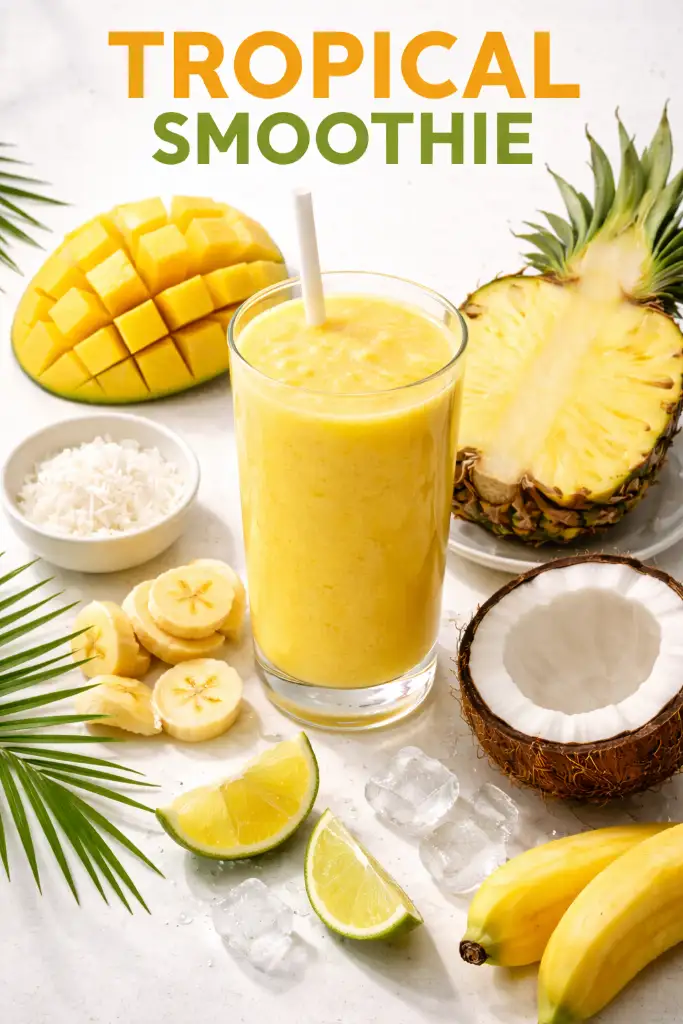
I’ve noticed something lately—everywhere I scroll, from TikTok morning routines to Reddit meal-prep threads, someone is blending a tropical smoothie. Bright mango, juicy pineapple, creamy coconut… it’s like sunshine in a glass. And honestly, I get why people love it. A tropical smoothie feels simple, refreshing, and comforting all at once.
In this guide, we’re going to break down everything you need to know about making the perfect tropical smoothie at home. Whether you’re looking for a quick breakfast smoothie, a dairy-free fruit blend, or just a refreshing summer drink, this article is for you. You’ll learn what makes a smoothie “tropical,” which fruits work best, how to adjust thickness, and how to customize it for your lifestyle.
If you enjoy trying new blends, don’t miss our Island Green Detox Tropical Smoothie for another fruity twist.
We’ll also talk about common mistakes, healthy variations, simple meal prep tips, and how tropical smoothies compare to other fruit smoothie options. By the end, you’ll be confident blending your own homemade tropicalsmoothie with balanced flavor and texture.
Let’s start with the basics.
What Is a Tropical Smoothie?
Definition and Flavor Profile
A tropical smoothie is a blended fruit drink made primarily with tropical fruits like mango, pineapple, banana, papaya, passion fruit, or coconut. What sets it apart from a regular fruit smoothie is the flavor combination—bright, naturally sweet, slightly tangy, and often creamy.
Unlike berry-heavy smoothies, a tropicalsmoothie leans toward juicy and vibrant flavors. Mango adds smooth sweetness. Pineapple brings a light tang. Banana balances everything with natural creaminess. Coconut water or coconut milk adds that signature island-style finish.
Many people describe the taste as refreshing and smooth, especially when made with frozen fruit instead of ice. The texture can range from thick and spoonable to light and drinkable depending on how much liquid you add.
Why Tropical Smoothies Are So Popular
There’s a reason tropical smoothie recipes are trending across social media. They look beautiful, taste naturally sweet, and feel lighter than heavy breakfast meals. Many people share colorful smoothie bowls topped with chia seeds, coconut flakes, or sliced fruit.
From a practical standpoint, a tropical smoothie is quick. Toss frozen mango, pineapple chunks, almond milk, and yogurt into a blender, and you’ve got breakfast in under five minutes. It’s also customizable. Want a protein boost? Add Greek yogurt. Prefer dairy-free? Use coconut milk or oat milk.
For those focusing on mindful eating, a tropical smoothie can fit into a balanced plan when portion sizes are reasonable. If you’re exploring structured smoothie planning, you might find our Weight Loss Smoothie Guide helpful for understanding combinations and balance.
What makes a tropicalsmoothie truly stand out is versatility. It works as:
- A quick breakfast smoothie
- A post-workout fruit blend
- A hydrating summer drink
- A smoothie bowl base
And the best part? You control the ingredients. That means no added syrups or unnecessary fillers—just real fruit, blended fresh at home.
In the next section, we’ll break down the essential tropical smoothie ingredients and how to choose the right base for flavor and texture.
Essential Ingredients for the Perfect Tropical Smoothie
A great tropical smoothie starts with simple, real ingredients. The magic isn’t in fancy powders or complicated steps. It’s in choosing the right tropical fruits, pairing them with a balanced liquid base, and blending them in the right ratio.
Core Tropical Fruits
The heart of any tropicalsmoothie is the fruit. Here are the most popular options and how they affect flavor and texture:
Mango – Naturally sweet and creamy. It gives your smoothie that smooth, almost silky consistency. Frozen mango works best for thickness.
Pineapple – Bright and slightly tangy. It adds freshness and balances sweeter fruits like banana.
Banana – The natural thickener. Even half a banana can make your tropical fruit blend creamier without adding sugar.
Papaya or Passion Fruit – These add a deeper tropical flavor. Papaya is mild and smooth, while passion fruit brings a slightly tart kick.
If you enjoy pineapple-based drinks, you might also like this refreshing Pineapple Cucumber Detox, which pairs tropical sweetness with cooling cucumber.
A simple beginner combo looks like this:
| Fruit | Purpose | Flavor Impact |
|---|---|---|
| Mango | Creamy base | Sweet & smooth |
| Pineapple | Brightness | Tangy & fresh |
| Banana | Thickness | Mild sweetness |
| Coconut | Island touch | Light & tropical |
Pro Tip: Use frozen fruit instead of ice whenever possible. It keeps your tropical smoothie thick and flavorful without watering it down.
Liquid Bases and Add-Ins
Now let’s talk about what brings everything together. The liquid you choose controls texture and richness.
Coconut Water – Light and refreshing. Great for a hydrating summer smoothie.
Coconut Milk – Creamy and slightly rich. Ideal for a thicker tropicalsmoothie.
Almond Milk – Neutral and dairy-free. Works well for everyday blending.
Greek Yogurt – Adds protein and creaminess.
For added texture and fiber, chia seeds are a popular option. If you’re curious how they work in fruit blends, check out Chia Seeds in Fruit Smoothies for ideas.
Add-ins you can experiment with:
- Chia seeds
- Flax seeds
- Vanilla extract
- Fresh lime juice
- A spoon of nut butter
If you’re aiming for a balanced breakfast smoothie, pairing fruit with protein can help keep you satisfied longer. For more structured smoothie planning, you may find helpful insights in our Best Smoothie Recipe for Losing Weight.
Pro Tip: Start with ¾ cup of liquid per 1½ cups of frozen fruit. Blend first, then adjust slowly. It’s easier to thin a smoothie than to thicken it.
When your ingredients are balanced correctly, a tropicalsmoothie becomes creamy, naturally sweet, and refreshing without extra sugar. In the next section, we’ll walk step-by-step through how to make one at home—and how to avoid common blending mistakes.
How To Make a Tropical Smoothie at Home
Making a tropical smoothie at home is easier than most people think. You don’t need expensive equipment or complicated ingredients. With the right fruit balance and blending method, you can create a creamy, refreshing fruit smoothie in just minutes.
Basic Tropical Smoothie Recipe (Step-by-Step)
Here’s a simple, reliable tropicalsmoothie recipe you can start with:
Ingredients:
- 1 cup frozen mango
- ½ cup frozen pineapple
- ½ banana
- ¾ cup coconut milk or almond milk
- 2 tablespoons Greek yogurt (optional for creaminess)
- 1 teaspoon lime juice (optional for brightness)
Instructions:
- Add the liquid to the blender first.
- Add yogurt (if using).
- Add frozen fruit last.
- Blend on high until smooth and creamy.
- Adjust thickness by adding small amounts of liquid if needed.
If you enjoy experimenting with smoothie combinations, you might also like our Heavy Metal Detox Smoothie Recipe, which uses a different fruit blend for variety.
The goal is smooth texture without chunks. If your blender struggles, pause and stir gently before blending again.
Pro Tip: If your tropical smoothie turns out too thin, add a few extra frozen mango chunks instead of ice. It thickens the texture without reducing flavor.
Common Mistakes to Avoid
Even a simple tropicalsmoothie can go wrong if you’re not careful. Here are the most common issues:
Too Much Liquid
Adding too much coconut water or milk too quickly makes the smoothie watery. Always start with less and add slowly.
Overpowering Pineapple
Pineapple is naturally strong. If your smoothie tastes too tangy, balance it with banana or mango.
Using Only Ice
Ice can dilute flavor. Frozen fruit keeps your tropical smoothie thick and vibrant.
Skipping Protein or Fiber
If you’re drinking your smoothie as a breakfast option, adding yogurt, nut butter, or seeds may help keep you full longer. For structured meal ideas that pair well with smoothies, check out our High Protein Breakfast Ideas for Weight Loss.
Pro Tip: Let frozen fruit sit out for 3–4 minutes before blending. Slightly softened fruit blends smoother and reduces strain on your blender.
A homemade tropicalsmoothie should taste balanced—sweet but not overwhelming, creamy but not heavy. Once you master the basic formula, you can easily adjust flavors based on what you have in your kitchen.
Next, we’ll look at healthy tropical smoothie variations, including dairy-free and higher-protein options.
Healthy Tropical Smoothie Variations
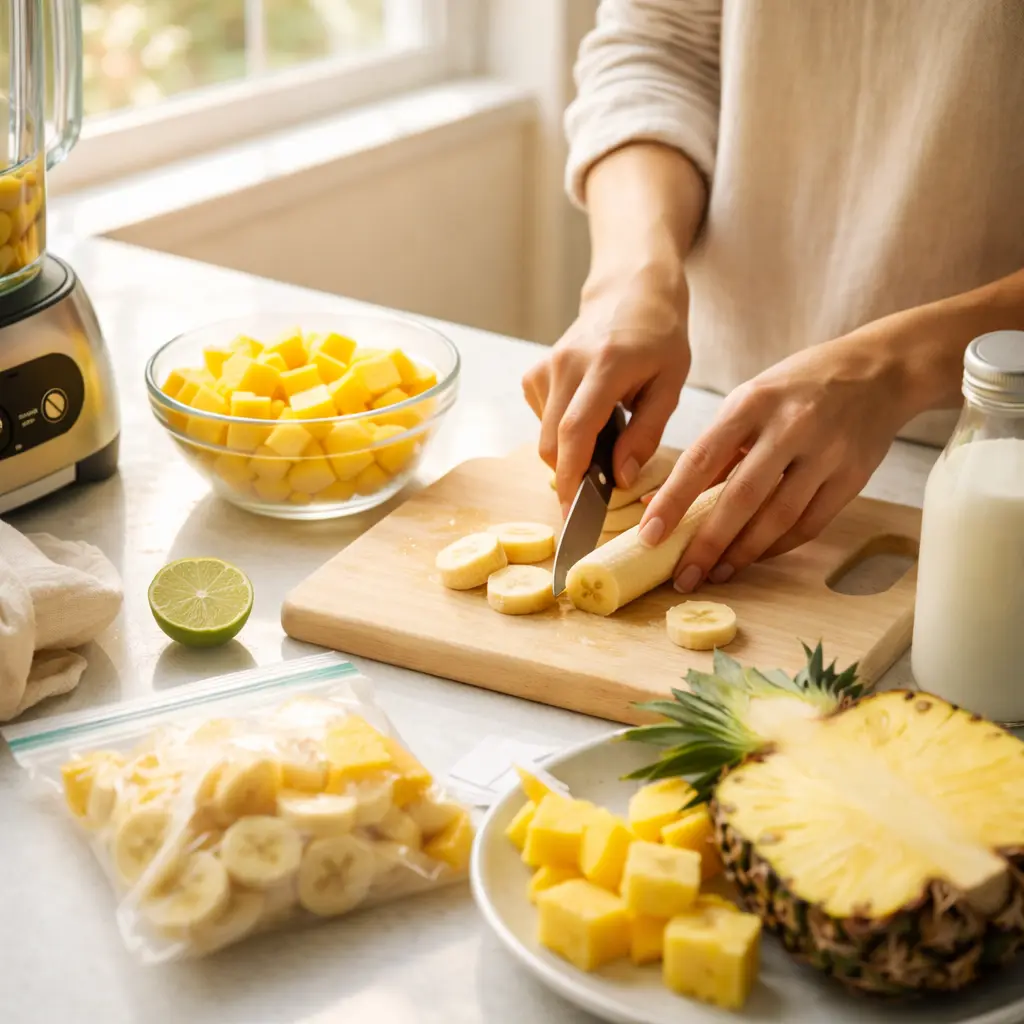
Once you understand the base formula, a tropicalsmoothie becomes incredibly flexible. You can adjust ingredients depending on your dietary preference, the season, or even your mood. A tropical smoothie doesn’t have to follow one strict recipe; instead, it can shift slightly while still keeping that bright mango-pineapple flavor at its core.
Dairy-Free Tropical Smoothie Options
A tropical smoothie is naturally easy to make dairy-free. Simply skip the yogurt and choose a plant-based liquid like coconut milk, almond milk, or oat milk. Coconut milk gives a tropical smoothie a creamy island-style texture, while almond milk keeps it lighter and more neutral.
If you want extra thickness in a dairy-free tropicalsmoothie, try adding half an avocado or a spoon of soaked chia seeds. Both options blend smoothly without overpowering the fruity flavor. Many people on TikTok prefer coconut-based versions because they create that smooth, café-style tropical smoothie consistency without needing cream.
For readers exploring lighter fruit-based blends, you may also enjoy our Detox Water for Weight Loss, which focuses on simple, refreshing ingredients.
Pro Tip: If your dairy-free tropical smoothie tastes slightly flat, add a squeeze of fresh lime. A little acidity brightens the fruit and brings everything together.
High-Protein Tropical Smoothie Ideas
If you’re using a tropical smoothie as a breakfast or post-workout option, adding protein can help balance the natural fruit sugars. A tropical smoothie pairs well with plain Greek yogurt, unflavored protein powder, or even silken tofu for a smooth texture.
For a simple protein boost:
- Add ½ cup Greek yogurt
- Add 1 scoop vanilla protein powder
- Add 1 tablespoon nut butter
Blending protein into a tropical smoothie makes it more filling without changing the refreshing taste. However, keep the flavor balance in mind. Too much protein powder can overpower mango and pineapple.
If you’re building a smoothie routine, you might find helpful guidance in our Best Smoothie Recipe for Losing Weight, where different combinations are discussed in a balanced way.
A tropical smoothie works best when sweetness, creaminess, and freshness stay in harmony. Whether dairy-free or protein-rich, the goal is always the same: keep the tropical smoothie smooth, naturally sweet, and easy to drink.
Next, we’ll look at how a tropical smoothie fits into different occasions—breakfast, summer refreshment, and meal prep planning.
Tropical Smoothie for Different Occasions
A tropical smoothie isn’t just a quick blend you make once in a while. It can easily fit into different parts of your day. Whether you need a fast breakfast, a mid-afternoon refresher, or something light during warm weather, a tropicalsmoothie adapts beautifully.
Tropical Smoothie for Breakfast
Mornings can feel rushed, and that’s where a tropical smoothie really shines. It takes less than five minutes to blend frozen mango, pineapple, banana, and your preferred milk into a creamy breakfast smoothie. Because a tropicalsmoothie already contains natural fruit sugars and fiber, pairing it with protein can help create better balance.
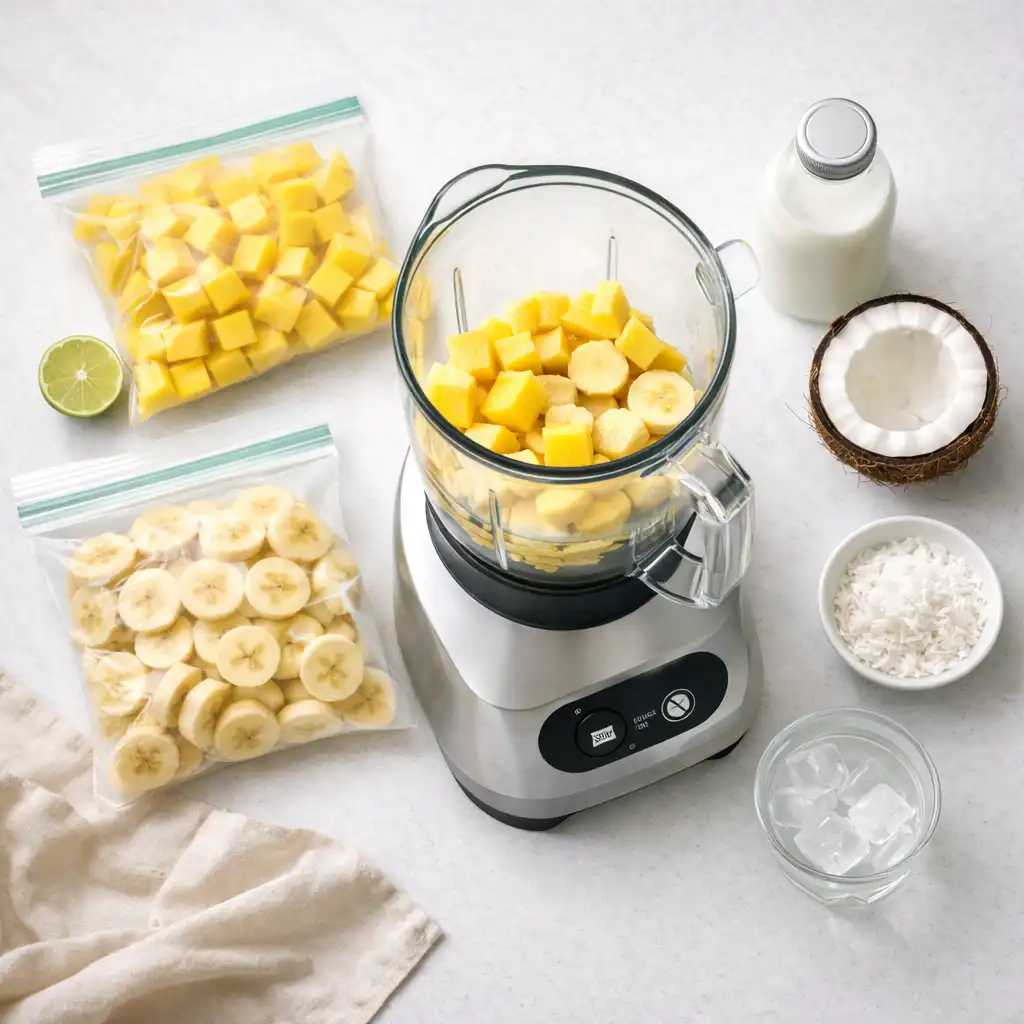
For example, adding Greek yogurt or nut butter makes your tropical smoothie more satisfying. Some people also prep freezer smoothie packs—portioning mango and pineapple into small bags so the tropical smoothie comes together even faster on busy mornings.
If you’re planning structured meals around your smoothie routine, you may also find ideas inside our Weight Loss Meal Prep Guide, which pairs well with simple breakfast blends.
Pro Tip: Prep three tropical smoothie freezer bags at once. That way, you only need to add liquid and blend during the week.
Tropical Smoothie for Summer Refreshment
During warmer months, a tropical smoothie feels especially refreshing. Using coconut water instead of milk makes the tropicalsmoothie lighter and more hydrating. Frozen pineapple and mango create a naturally chilled texture without needing ice.
You can also turn your tropical smoothie into a smoothie bowl by reducing the liquid slightly. Pour it into a bowl and top with sliced fruit, coconut flakes, or chia seeds. The thicker texture makes the tropical smoothie feel more like a meal than a drink.
If you enjoy experimenting with fruity summer beverages, you might also like our Strawberry Pineapple Swirl Sprite for another tropical-inspired idea.
A tropical smoothie works because it’s flexible. It can be light and hydrating in summer, or creamy and filling in the morning. The ingredients stay simple, but the experience changes depending on how you serve it.
Next, we’ll take a closer look at the nutritional side of a tropicalsmoothie and how to think about fruit sugars, fiber, and balance.
Nutritional Overview of a Tropical Smoothie
When people ask whether a tropical smoothie is “healthy,” the answer depends on ingredients and portion size. A homemade blend made with whole fruits, balanced liquid, and optional protein can fit into many eating styles. Because a tropical smoothie typically contains mango, pineapple, and banana, it naturally provides fiber, vitamin C, and potassium.
Natural Fruit Sugars Explained
Fruits used in a tropical smoothie contain natural sugars. Unlike added syrups, these sugars come packaged with fiber and water. That fiber may help slow digestion and create a steadier energy release compared to sweetened drinks. Still, portion awareness matters. Using two to three servings of fruit in one tropical smoothie can increase overall sugar intake quickly.
To keep balance, consider:
- Limiting banana to half
- Pairing fruit with yogurt or seeds
- Avoiding sweetened coconut milk
A lighter tropical fruit blend made with coconut water instead of juice often tastes just as refreshing without unnecessary sweetness.
Pro Tip: If you prefer a less sweet taste, add a handful of frozen cauliflower. It thickens your smoothie without changing the tropical flavor.
How Tropical Smoothies May Support a Balanced Lifestyle
From my experience in the kitchen, a fruit-based smoothie works best when it complements whole meals rather than replaces them entirely. A tropicalsmoothie can be part of a balanced breakfast when paired with protein or healthy fats. Many home cooks also enjoy adding chia seeds, which you can read more about in our guide on Chia Seeds in Fruit Smoothies.
Hydration is another benefit people often mention. Because a tropical smoothie contains high-water fruits like pineapple and mango, it can feel refreshing, especially in warmer weather. Some readers who enjoy lighter beverage ideas also explore options like Natural Alternative to Gatorade for hydration-focused recipes.
It’s important to remember that no single tropical smoothie replaces a varied diet. Instead, it can be one enjoyable piece of a broader eating pattern built around whole foods.
This recipe is shared for informational purposes and is not a substitute for medical advice.
Next, we’ll cover how to customize your smoothie’s texture and flavor so every blend turns out exactly how you like it.
Customizing Your Tropical Smoothie Like a Pro
Once you’ve mastered the basics, a tropicalsmoothie becomes your creative playground. Small tweaks can completely change the texture, flavor, and overall experience without making the process complicated. The key is understanding how each ingredient affects the final blend.
Texture Control Techniques
Texture is what separates an average tropical smoothie from one that feels café-quality. If your smoothie is too thin, it may taste diluted. If it’s too thick, it can be hard to drink.
To make a thicker tropical smoothie:
- Use fully frozen mango and pineapple
- Reduce liquid slightly
- Add Greek yogurt or chia seeds
- Blend in half a frozen banana
To make a lighter, more drinkable tropical smoothie:
- Increase coconut water slightly
- Blend longer for extra smoothness
- Skip heavy add-ins like nut butter
If you enjoy experimenting with fruit textures, you may also like our guide on Beet Juice Recipe Blender, which explains blending techniques for smooth results.
Pro Tip: Always add liquid first and frozen fruit last. This helps your blender create a vortex, resulting in a smoother tropical smoothie with less strain on the motor.
Flavor Boosters That Make a Difference
Even a well-balanced tropicalsmoothie can benefit from small flavor upgrades. A squeeze of lime brightens mango instantly. Fresh mint adds a cooling effect. A splash of vanilla extract softens pineapple’s tang.
Other natural additions include:
- Toasted coconut flakes
- A tiny pinch of sea salt
- Fresh grated ginger
- A drizzle of honey (if extra sweetness is needed)
Some readers who enjoy experimenting with flavor combinations also explore tropical-inspired drinks like our Calamansi Drink, which highlights citrus brightness in a different way.
The beauty of a tropical smoothie is flexibility. You can keep it simple with mango and coconut water, or layer in subtle enhancements for a more complex taste. Just remember—balance is everything. A tropical smoothie should feel refreshing, not overpowering.
Next, we’ll talk about storing, meal prepping, and how to keep your tropical smoothie fresh when you’re planning ahead.
Storing and Meal Prepping Tropical Smoothies
There was a time when I thought a tropical smoothie had to be blended fresh every single morning. But after a few rushed weekdays, I realized planning ahead makes everything easier. With just a little prep, a tropicalsmoothie can become one of the simplest parts of your routine instead of the most hectic.
Can You Store a Tropical Smoothie?
A freshly blended tropical smoothie always tastes best right away. The texture is creamier, and the fruit flavors feel brighter. However, you can store a tropical smoothie in the refrigerator for up to 24 hours if needed.
To keep it fresh:
- Use an airtight glass jar
- Fill the jar to the top to reduce air exposure
- Shake well before drinking
Because a tropicalsmoothie contains natural fruit fiber, separation is completely normal. Just stir or shake it, and the consistency usually returns.
If you enjoy preparing drinks ahead of time, you might also like our guide to Homemade Electrolyte Drink, which offers another make-ahead option for busy weeks.
Pro Tip: Add a small squeeze of lemon or lime before storing your tropical smoothie. The citrus helps preserve freshness and slows color changes.
Smoothie Prep Hacks for Busy Days
Meal prepping a tropical smoothie doesn’t mean blending it days in advance. Instead, the smarter approach is prepping the ingredients. This keeps the flavor fresh while still saving time.
Here’s a simple freezer-pack method:
- Portion mango, pineapple, and banana into freezer bags.
- Label each bag with the date.
- Store flat in the freezer.
When you’re ready, just dump the frozen fruit into a blender, add your liquid, and blend. The tropical smoothie comes together in minutes with almost no cleanup.
Some people even freeze leftover tropicalsmoothie into ice cube trays. Later, those cubes can be re-blended with a splash of coconut water for a quick refresher. It’s a practical way to reduce waste while keeping that tropical flavor ready anytime.
A well-planned tropical smoothie routine feels effortless. You’re not scrambling for ingredients. You’re simply blending what’s already prepared. And that small habit can make healthy choices feel more consistent and less overwhelming.
Next, we’ll compare a tropical smoothie to other popular smoothie styles so you can see how it stands out in flavor and texture.
Tropical Smoothie vs Other Fruit Smoothies
Not all smoothies taste or feel the same. A tropical smoothie stands out because of its bright, sunny flavor profile and naturally creamy texture. While many fruit blends rely heavily on berries or greens, a tropicalsmoothie leans into mango, pineapple, banana, and coconut for a smoother, sweeter experience.
Tropical Smoothie vs Berry Smoothie
A berry smoothie typically features strawberries, blueberries, or raspberries. These fruits create a slightly tart and sometimes thicker drink. In contrast, a tropical smoothie often feels smoother and less sharp on the palate because mango and banana soften the acidity.
Texture-wise, a tropical smoothie tends to be creamier, especially when blended with coconut milk. Berry smoothies can feel more pulpy depending on the seeds. Flavor preference really comes down to what you enjoy—bright island-style sweetness or bold berry tang.
If you like experimenting with fruit-forward drinks, you might enjoy our refreshing Strawberry Pineapple Swirl Sprite, which blends tropical and berry notes in a playful way.
Pro Tip: If you want the best of both worlds, combine frozen mango with a handful of strawberries. It keeps the tropicalsmoothie smooth while adding berry depth.
Tropical Smoothie vs Green Smoothie
Green smoothies often include spinach, kale, or other leafy vegetables. They usually taste more earthy and less sweet. A tropical smoothie, on the other hand, focuses on fruit-first flavor with a naturally sweet finish.
That said, you can easily turn a tropicalsmoothie into a light green blend by adding a small handful of spinach. The mango and pineapple typically mask the leafy flavor while keeping the bright tropical taste intact.
For readers who enjoy exploring vegetable-forward blends, our Island Green Detox Tropical Smoothie offers a balanced example.
Ultimately, a tropical smoothie feels approachable. It’s often the easiest starting point for beginners because the flavors are familiar, smooth, and refreshing. Whether you prefer berry-based drinks or green blends, a tropicalsmoothie remains one of the most versatile and crowd-friendly options you can make at home.
In the next section, we’ll answer the most common questions people ask about making and customizing a tropical smoothie.
Frequently Asked Questions About Tropical Smoothie
Over time, I’ve noticed that the same questions about tropical smoothie recipes keep popping up on Quora, Reddit threads, and short-form videos. So let’s answer them clearly and simply.
What fruits go best in a tropical smoothie?
The best fruits for a tropical smoothie are mango, pineapple, banana, papaya, and passion fruit. Mango creates a creamy base, pineapple adds brightness, and banana smooths everything out. If you want a slightly lighter tropicalsmoothie, you can reduce banana and increase pineapple for more tang.For extra variety, some readers enjoy blending in dragon fruit or coconut chunks to deepen that tropical flavor.
Is a tropical smoothie healthy?
A tropical smoothie can fit into a balanced eating pattern when made with whole fruits and mindful portions. Because a tropical smoothie contains natural fruit sugars, pairing it with protein like Greek yogurt or chia seeds can help balance sweetness. The key is avoiding sweetened syrups or juice concentrates.Like any fruit smoothie, moderation and ingredient quality matter more than trends.
Can I make a tropical smoothie without dairy?
Yes, a tropicalsmoothie is naturally easy to make dairy-free. Simply use coconut milk, almond milk, or coconut water instead of yogurt or regular milk. The tropical smoothie will still taste creamy if you use frozen mango and banana.Some people also add soaked cashews to create a smooth dairy-free texture.
How do I thicken my tropical smoothie?
If your tropicalsmoothie turns out too thin, use more frozen fruit instead of ice. Mango works especially well for thickening. You can also add chia seeds or a spoon of nut butter to improve texture.Blending less liquid at the start makes it easier to control consistency.
Can I prepare tropical smoothie in advance?
Yes, you can prep ingredients ahead of time. While a tropical smoothie tastes best fresh, freezer fruit packs make daily blending quick and convenient. Store pre-portioned mango and pineapple in sealed bags, then add liquid when ready to blend.If storing a blended tropical smoothie in the fridge, keep it airtight and shake before drinking.A tropicalsmoothie remains one of the most flexible and beginner-friendly fruit blends. Whether you’re new to smoothies or refining your routine, small adjustments make a big difference.Next, we’ll wrap everything up with a simple conclusion and helpful next steps.
Conclusion: Bringing It All Together
A tropical smoothie is more than just blended fruit. It’s a simple, flexible drink that fits into busy mornings, warm afternoons, or relaxed weekend routines. With the right balance of mango, pineapple, banana, and your preferred liquid base, a tropical smoothie can taste creamy, refreshing, and naturally sweet without complicated steps.
Throughout this guide, we covered how to choose ingredients, adjust thickness, prepare freezer packs, and customize flavors. Whether you prefer a dairy-free tropicalsmoothie with coconut water or a protein-rich version with Greek yogurt, the foundation stays the same—real fruit blended with intention.
If you’re continuing your smoothie journey, you might also enjoy our detailed Best Smoothie Recipe for Losing Weight for additional blend ideas and balanced combinations.
From my kitchen to yours, remember that no single tropical smoothie needs to be perfect. Adjust sweetness, tweak the texture, and experiment with small changes until it fits your taste. The beauty of a tropical smoothie is that it’s forgiving, adaptable, and easy to make your own.
If you’d like more refreshing drink ideas and healthy recipes, feel free to connect with us on Facebook or explore visual inspiration on Pinterest. There’s always a new tropicalsmoothie variation waiting to be blended.