The benefits of drinking bone broth in the morning come down to what is actually in your cup: fluid, a savory alternative to sweet drinks, and sometimes a useful amount of protein. A warm mug can fit into your breakfast routine, but there is no established evidence that drinking it first thing in the morning produces special health benefits. Here is what you can realistically expect, how to choose a broth, and three easy ways to enjoy it.
3 Benefits of Drinking Bone Broth in the Morning
1. A savory way to get more fluids
One of the simplest benefits of drinking bone broth in the morning is that it contributes to your fluid intake. If you find plain water unappealing first thing in the morning, a warm, lightly seasoned broth offers another option. It is not necessary to drink broth for hydration, and a salty broth is not automatically better than water.
2. A little extra protein with breakfast
Bone broth can contain gelatin and other proteins released during cooking. The amount differs considerably between products and homemade batches. Check the grams of protein per serving rather than assuming all bone broth is a high-protein drink.
Collagen-derived protein should not be treated as a replacement for all your other protein sources. Pair your mug with eggs, yogurt, beans or another protein-containing food if you want a more substantial breakfast.
3. A convenient alternative to sweet breakfast drinks
Plain bone broth is usually unsweetened. If you enjoy savory flavors, it can replace a sweetened beverage without requiring another elaborate recipe. Compare the calories, added sugars and sodium on the labels of the drinks you are considering. When comparing the benefits of drinking bone broth in the morning with those of a sweet breakfast drink, consider what you are replacing rather than expecting a fat-burning effect.

Benefits of drinking bone broth in the morning: what does the research say?
Bone broth is made by cooking animal bones and connective tissue in water, often with vegetables or seasonings. The liquid can contain gelatin and amino acids. However, a 2019 analysis of bone broth found that its collagen-related amino acid content was inconsistent and did not reliably match the amounts used in collagen supplement research.
That distinction matters: results from a concentrated collagen supplement cannot simply be applied to an ordinary mug of broth. Cleveland Clinic’s nutrition overview also notes that direct research on bone broth is limited. Drinking it is not a proven treatment for joint pain, wrinkles or digestive disorders.
There is also no convincing basis for promising that morning bone broth detoxifies your body, resets your metabolism or repairs your gut lining. Enjoy it as food rather than as a medical intervention.
Morning bone broth vs. evening: does timing matter?
There is no established optimal hour for consuming bone broth. Drinking it before breakfast can be convenient if you enjoy a savory start, while an evening cup may fit more naturally alongside dinner. The nutritional benefits of drinking bone broth in the morning are not exclusive to breakfast; your overall diet and the broth’s composition matter more than the clock.
If you practice strict calorie-free intermittent fasting, remember that broth contains calories. If you are fasting for a blood test or medical procedure, follow the instructions you received rather than substituting broth for water.
How to choose a good bone broth
- Serving size: To assess the benefits of drinking bone broth in the morning, compare equal volumes, such as one cup (240 mL), rather than differently sized label servings.
- Protein: Choose a broth with a protein amount that fits your meal; do not rely on the words “bone broth” alone.
- Sodium: Look for unsalted or lower-sodium versions if you need to limit salt. The FDA’s sodium label guide explains that a low-sodium serving generally contains no more than 140 mg. The Daily Value for sodium is 2,300 mg.
- Ingredients: Check for seasonings and allergens. If you avoid certain animal ingredients, confirm which bones were used.
Label example: A hypothetical carton listing 450 mg of sodium per cup supplies about 20% of the 2,300 mg Daily Value. That number is an example, not a nutritional estimate for every broth. Diluting it with water lowers the sodium concentration; drinking the entire diluted portion still gives you the same total sodium.

How to prepare a morning cup of bone broth
For one serving, start with 1 cup (240 mL) of fully cooked, low-sodium chicken or beef bone broth. You will need a small saucepan or microwave-safe mug. Allow approximately five minutes, depending on your heating method.
- Pour the broth into a small saucepan and heat until hot. If reheating leftovers, bring the broth to a rolling boil and verify that it reaches 165°F (74°C).
- Remove from the heat and add one of the flavor combinations below if desired.
- Let the broth cool to a comfortable drinking temperature before sipping. Serve alongside breakfast if you need a full meal.
3 easy ways to flavor your morning broth
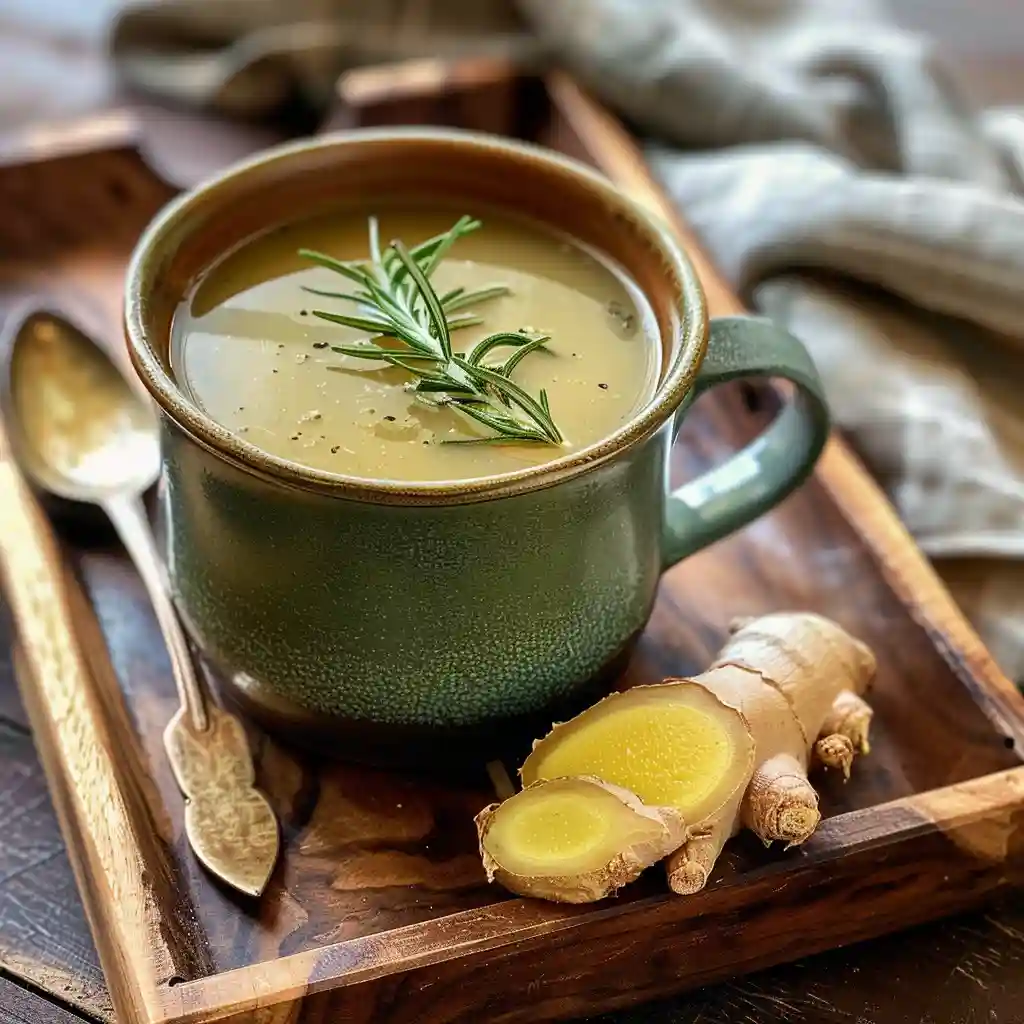
- Lemon and ginger: Add 2 thin slices of fresh ginger while warming; finish with 1 teaspoon of lemon juice.
- Parsley and pepper: Stir in 1 teaspoon of chopped parsley and a pinch of black pepper.
- Breakfast broth bowl: Add 1/2 cup of cooked rice and a handful of cooked vegetables to a cup of broth. Heat thoroughly and serve with a protein-containing side if desired.
If you prefer spoonable breakfasts, try our easy congee breakfast recipe or our simpler three-ingredient rice porridge. Both offer a warm, savory alternative to sipping broth on its own.
Who should be careful with daily bone broth?
Despite the potential benefits of drinking bone broth in the morning, a mug of broth is not a nutritionally complete breakfast for most people. If you have kidney disease or a prescribed limit on sodium, potassium, protein or fluids, speak with your healthcare professional about whether it fits your individual plan. Check ingredient labels if you have food allergies, and avoid replacing prescribed treatments with broth.
Storage and reheating
Refrigerate homemade or opened cooked broth promptly in shallow, covered containers at 40°F (4°C) or below. USDA guidance recommends refrigerating perishable leftovers within two hours, or one hour when the temperature is above 90°F (32°C), and using refrigerated leftovers within three to four days. Follow any shorter storage directions on the package.
Freeze portions you will not use in time. Reheat leftovers to 165°F (74°C); bring soups and broths to a rolling boil. See the USDA’s leftover storage guidance and safe reheating instructions.
Frequently asked questions
Is it better to drink bone broth in the morning or at night?
Choose whichever time suits your meals. Research has not established a special health advantage for morning consumption.
Can I drink bone broth on an empty stomach?
You can drink it before breakfast if you tolerate it. There is no established need to drink it on an empty stomach to absorb its nutrients.
Does bone broth break a fast?
Bone broth contains calories and often protein, so it generally breaks a strict calorie-free fast. For medical procedures or blood tests, follow your clinician’s fasting instructions.
Does drinking bone broth help with weight loss or gut healing?
It is not a proven weight-loss treatment or a cure for intestinal disease. Its protein and calories vary; any effect on weight depends on the overall diet.
How much bone broth should I drink in the morning?
A cup is a practical serving idea, not a medically recommended dose. Check the sodium and protein on the label and adjust the amount to your dietary needs.
Can I drink bone broth every day?
It can fit into a varied diet, but check the sodium content. Ask your healthcare professional if you have kidney disease or prescribed fluid, sodium, potassium or protein restrictions.
The bottom line
The main benefits of drinking bone broth in the morning are practical: a satisfying savory drink that contributes fluid and, depending on the product, some protein. Choose a broth that fits your sodium needs, pair it with a balanced breakfast, and enjoy it at the time that suits you. You do not need a morning-only routine to benefit from its nutritional content.
This article is for general food and nutrition information, not individualized medical advice.