Hojicha latte recipe: A hojicha latte blends Japanese roasted green tea with milk for a mellow, toasted tea drink. The simplest version uses finely ground hojicha powder, a little warm water, and warmed or cold milk. You can make it hot or over ice.
Hojicha is roasted Japanese green tea, not matcha. Its color is brown rather than vivid green, and the roasting gives a different aroma. If you have brewed hojicha leaves instead of powder, the ratio and method need to change.
What Makes This Hojicha Latte Different From Matcha?
A hojicha latte recipe starts with Japanese roasted green tea, which has a brown color and toasted aroma. Unlike traditional matcha, this drink uses roasted tea powder. Dissolving one teaspoon of powder in a quarter cup of warm water before adding milk helps prevent clumps; these proportions follow a typical manufacturer’s starting ratio. The method has not been kitchen-tested by HeartlyRecipes.
Ingredients and Equipment
Use 1 teaspoon (about 2 g) of finely ground hojicha powder, ¼ cup (60 ml) of water heated to about 175°F (80°C), and ¾ cup (180 ml) of milk or unsweetened oat milk. Add a teaspoon of syrup only if desired, and use ice for the cold version. A small whisk or milk frother helps disperse the tea; for the hot version, gently heat the milk without boiling it.
Useful equipment: a tea strainer, small whisk or frother, a cup and serving glass. Read all steps before cooking.
Hojicha Latte Recipe: Hot and Iced Roasted Green Tea: Full Recipe
Estimated preparation: 5 minutes; active cook time: 3 minutes; total: 8 minutes. Yield: 1 latte (about 7–8 fl oz before ice).
Print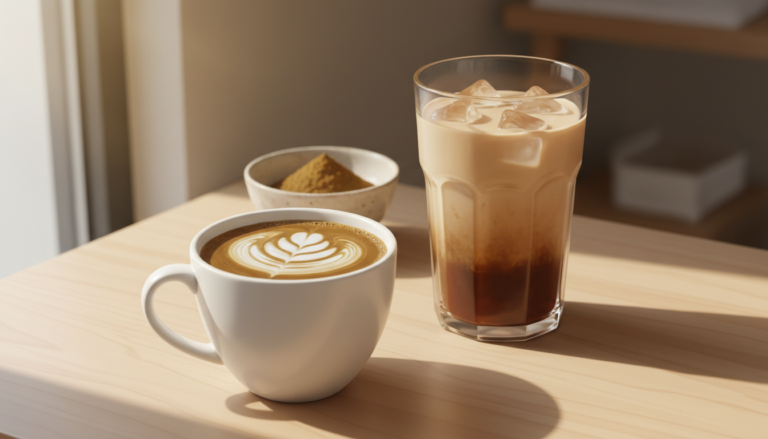
Hojicha Latte Recipe: Hot and Iced Roasted Green Tea
A hojicha latte blends Japanese roasted green tea with milk for a mellow, toasted tea drink. The simplest version uses finely ground hojicha powder, a little warm water, and warmed or cold milk. You can make it hot or over ice. Developed from editorial research; not kitchen-tested.
- Total Time: 8 minutes
- Yield: 1 latte (about 7–8 fl oz before ice) 1x
Ingredients
- 1 teaspoon (about 2 g, depending on brand) finely ground hojicha powder
- ¼ cup (60 ml) hot water at approximately 175°F (80°C)
- ¾ cup (180 ml) milk or unsweetened oat milk
- 1 teaspoon (5 ml) maple syrup or simple syrup, optional
- 1 cup ice cubes, only for the iced version
- Optional: an extra pinch of hojicha powder for serving
 Get Recipe Ingredients
Instructions
- Sift the hojicha powder into a wide cup or small bowl so it will dissolve without dry lumps.
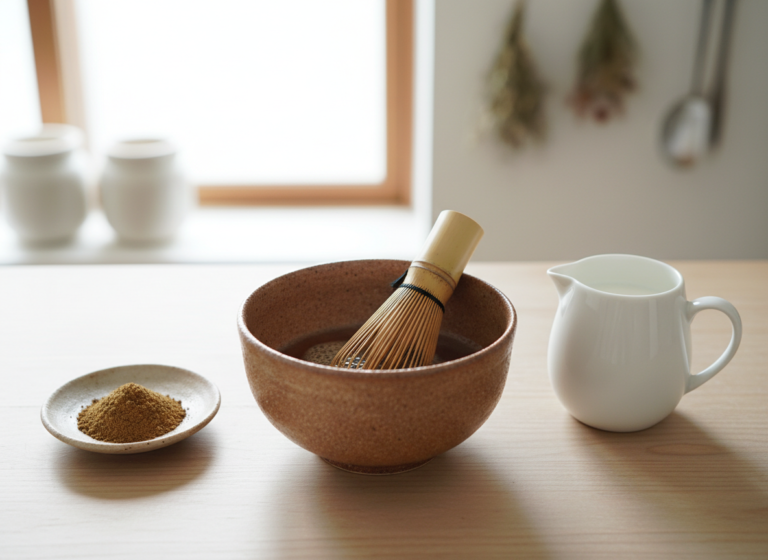
- Add ¼ cup (60 ml) hot water around 175°F (80°C), not boiling, and whisk with a bamboo whisk, handheld milk frother, or small whisk until it is evenly dispersed.

Whisking roasted hojicha powder with warm water (AI illustration). - For a hot latte, warm the milk gently until steaming but not boiling, then froth if desired. Mix in syrup to taste and pour milk over the concentrated hojicha.
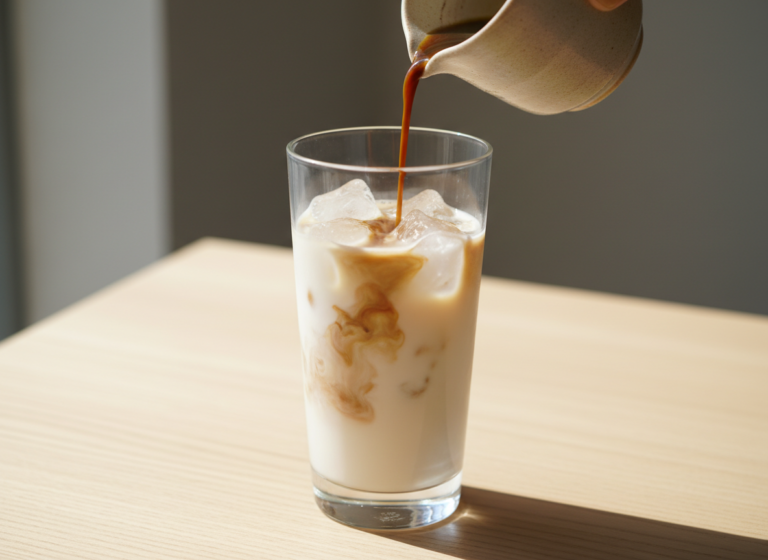
- For an iced hojicha latte, fill a serving glass with ice, pour in cold milk and optional syrup, then add the whisked hojicha concentrate slowly; stir before drinking.
Assembling the iced hojicha latte (AI illustration). - Taste and adjust the milk-to-tea balance rather than adding extra powder at random. Serve immediately.
Notes
Use finely ground roasted hojicha powder, not loose tea leaves. Tea contains some caffeine; amount varies by brand. Milk is an allergen if dairy milk is used. Estimated 5-minute prep and 3-minute milk heating for hot drinks; iced version may be faster. Keep any milk-based leftovers cold. Editorially developed, not kitchen-tested.
- Prep Time: 5 minutes
- Cook Time: 3 minutes
- Category: Beverage
Nutrition
- Serving Size: 1 serving
What Does Hojicha Taste Like?
Hojicha is green tea that has been roasted. The roasted character gives it a toasted, sometimes nutty impression in a milk drink; it is not the same grassy flavor as matcha. The exact taste depends on the roasting level and powder brand.
Why Dissolve Powder in Water First?
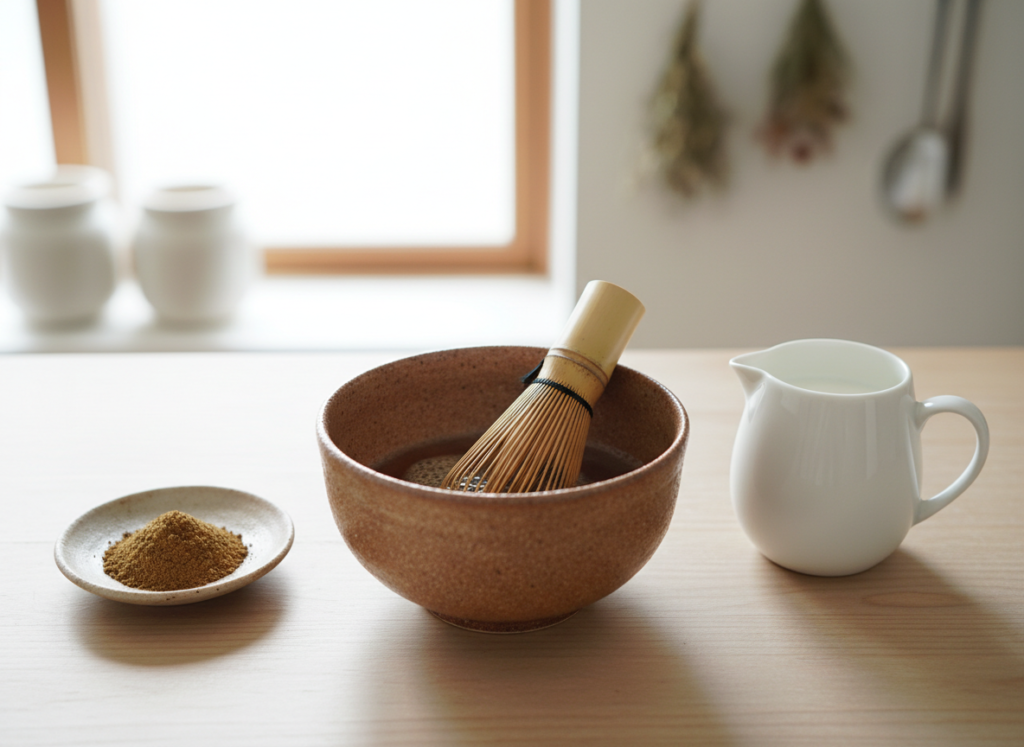
Dry tea powder can clump when poured directly into a cold glass of milk. Whisking it with a small amount of warm water first creates a smoother base. Hojicha Co. recommends a concentrated tea mixture before adding milk.
Hot Hojicha Latte vs Iced Hojicha Latte
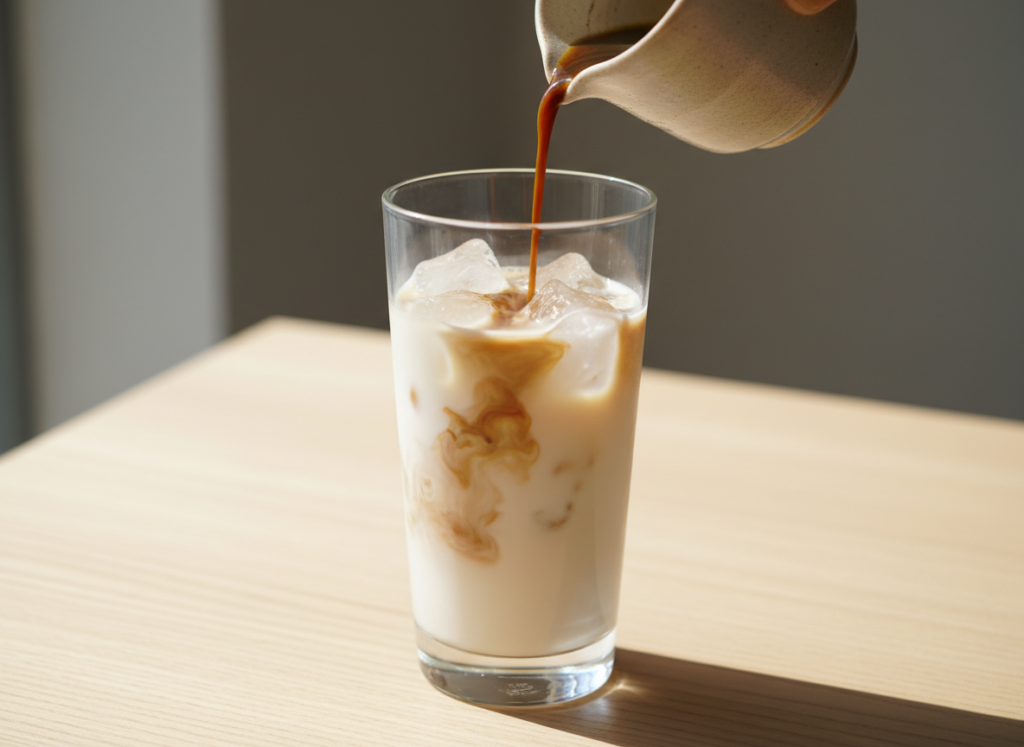
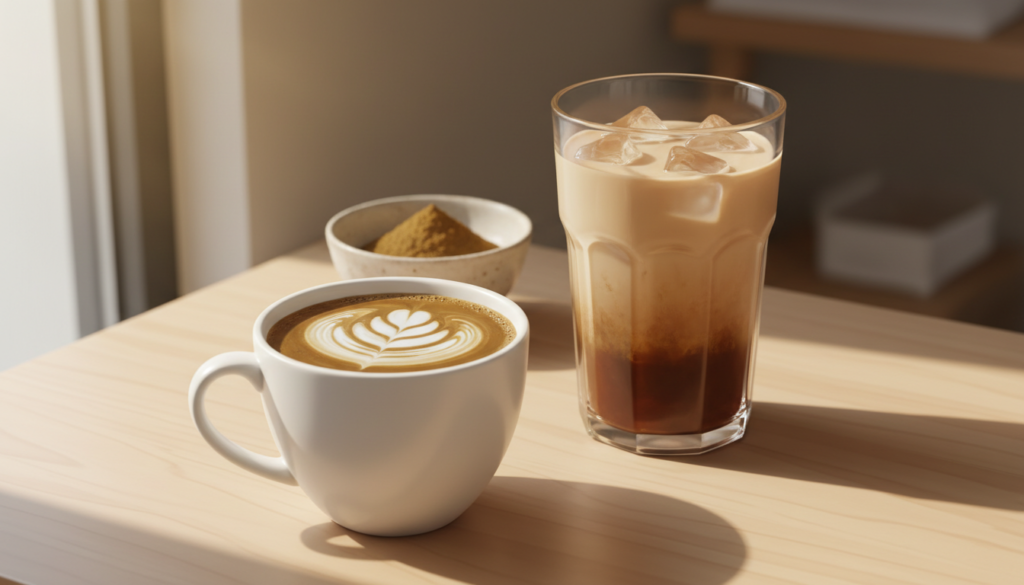
A hot latte is ideal when you want a warm, frothy drink. The iced version can have a striking two-tone look before stirring, but it needs strong tea concentrate so the ice does not dilute it. Both are built from the same powder-to-water base.
Does Hojicha Have Caffeine?
Hojicha is made from tea leaves and may contain caffeine. Do not assume a particular cup is caffeine-free; the amount varies with the product and concentration. Check packaging for product-specific information if you are managing caffeine intake.
Milk, Sweeteners and Substitutions
Whole milk, lactose-free milk and oat milk can all be used. Different brands froth differently. Start unsweetened and add syrup after tasting. If you use sweetened oat milk, you might not need extra syrup.
Common Mistakes to Avoid
Avoid boiling water, which can flatten delicate flavors in some teas. Sift powder to avoid clumps. Use actual hojicha powder rather than loose tea leaves when following these measurements; tea leaves require brewing and straining, not whisking.
Can You Make a Hojicha Latte Ahead?
The best foam and texture happen right after mixing. If you prepare the concentrate early, cool it promptly and refrigerate in a covered container, then combine with milk shortly before serving. Keep milk beverages refrigerated and do not leave them out beyond two hours.
How to Serve It and What to Make Next
Serve the hot latte immediately while the milk is warm, or enjoy the iced version before its ice melts too much. If you’re exploring different teas, see how to brew green tea and our strawberry matcha drink.
How Can You Get a Smooth Iced Hojicha Latte?
Sift the brown roasted-tea powder first, then whisk it into measured warm water. Make a concentrated, lump-free mixture before pouring it over cold milk and ice. A clear glass shows the layers briefly, but the drink should be stirred before sipping. Hojicha is still tea and contains some caffeine; avoid labeling it caffeine-free. If using loose-leaf hojicha, brew and strain it separately rather than applying these powder amounts.
Frequently Asked Questions
What is the difference between hojicha and matcha?
Both are Japanese green teas, but hojicha is roasted, giving a brown color and toasted flavor; matcha is not roasted in the same way.
Can I make hojicha latte without a bamboo whisk?
Yes. Use a small metal whisk, handheld frother, or lidded jar for the water-and-powder mixture, taking care with hot liquid.
Is hojicha latte caffeine-free?
No. Hojicha comes from tea and can still contain caffeine. Check the specific product for any quantified content.
Can I use loose-leaf hojicha?
Yes, but you need to brew a stronger tea with hot water, strain out the leaves, and add milk. The powder quantities in this recipe do not apply.
What milk works best for iced hojicha latte?
Milk and oat milk are both workable; choose by taste and dietary needs. A barista-style oat milk may create a creamier mouthfeel.
Sources and Editorial Notes
The method draws on general cooking techniques and product guidance, not a claim of first-hand testing. Useful references: Hojicha Co.’s base method; Japanese cooking guide to hojicha. Brands, ingredients and times may change; verify before publication.
Editorial disclosure: This formulation has not been prepared or taste-tested by HeartlyRecipes. Illustrative images, if added, are AI generated rather than photographs of a tested batch.